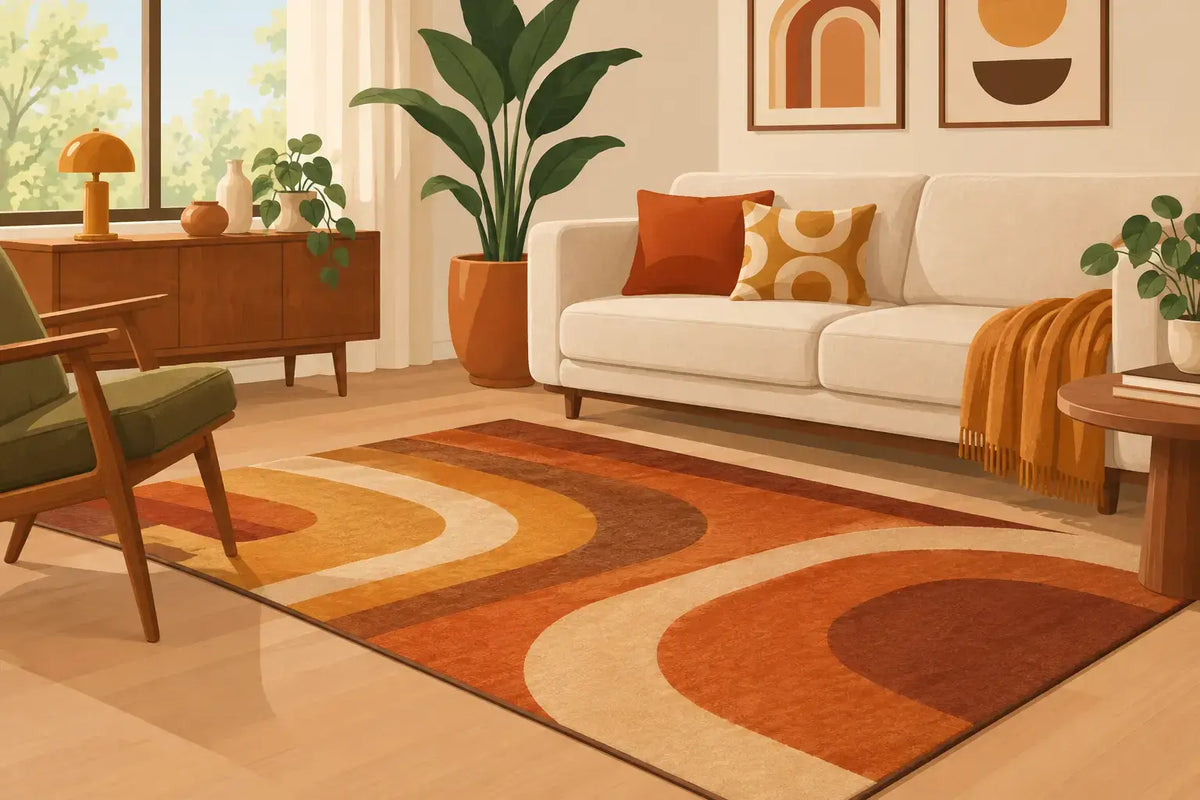
A retro rug is more than a colorful accent under the coffee table. It can instantly soften a sleek living room, add character to a neutral dining area or give a bedroom that cozy, finished look. The most beautiful retro rug trends draw inspiration from the 60s, 70s and 80s, yet feel right at home in a contemporary Belgian interior.
That’s exactly why this style is so popular. Retro combines familiar shapes and warm colors with the comfort we expect today: a pleasant pile, easy care and a size that brings the room together beautifully. You don’t need to create a completely vintage interior. One carefully chosen rug can be enough to give your home more personality.
Retro rug trends: let color speak again
While minimalist interiors revolved around white, gray and black for years, we’re now seeing more daring colors on the floor again. Think rust brown, cognac, ochre yellow, olive green, midnight blue and warm terracotta shades. These colors create a cozy feel without being too loud.
A rug in brown, beige and orange looks beautiful with a wooden floor, a cognac-colored sofa or walnut furniture. If you prefer a calmer look, choose a retro design with a sand-colored base and subtle green or red accents. This gives you a touch of nostalgia while keeping your interior light and balanced.
The choice depends greatly on the light. Warm beige and caramel tones work especially well in a dark living room. In a sunny room, a deep blue, green or burgundy rug can make more of a statement. Looking at a sample or photo is useful, but also consider the colors already in your curtains, sofa and walls.
Graphic patterns with soft lines
Retro doesn’t automatically mean a busy pattern. Current collections often play with waves, rounded blocks, circles, diamonds and abstract shapes. These graphic designs bring movement to a room without making everything feel restless.
A rug with large, curved lines is a great choice alongside a round coffee table or a sofa with organic shapes. A geometric pattern with straight sections, on the other hand, works well in an interior with black metal details, a rectangular dining table or a modern cabinet. Repeating shapes creates a sense of cohesion.
Want a striking rug? Keep the rest of the floor understated. With a bold retro print, a plain sofa often works better than adding another busy pattern on cushions or curtains. If you already have a sofa in a standout fabric, choose a retro rug where the color matters more than the design.
The 70s look remains a classic
The 70s are still a major source of inspiration, especially because this style exudes warmth and relaxation. Low furniture, wood tones, soft textures, and earthy colors come together to create an interior that makes you feel at home. A retro rug literally lays the foundation.
Picture an abstract rug in brown and cream under a low sofa, paired with a wooden side table and a large houseplant. Or choose a rug with orange and beige accents in a dining area with wooden chairs. The result feels rich and inviting without making your home look like a set from the past.
The key is to use it in moderation. Pair a 70s-inspired rug with contemporary lighting, light-colored walls, and a few modern accessories. This creates contrast and keeps the room feeling fresh. A retro rug can be the focal point without dictating the style of every piece of furniture around it.
Vintage style, practical for everyday life
An authentic antique rug has charm, but it does not always suit a busy family life. Stains, pets, children at play, and a frequently used dining room call for a practical solution. That is why retro-look rugs are so appealing: they offer the style you want, often with modern benefits.
A low-pile rug, for example, is useful under the dining table. Chairs slide more easily, crumbs are easier to remove, and the rug keeps its shape. In the living room, it can be softer, especially if you like walking around barefoot or your children play on the floor. A non-slip backing adds extra security on smooth floors and keeps the rug from shifting as everyone moves around the room.
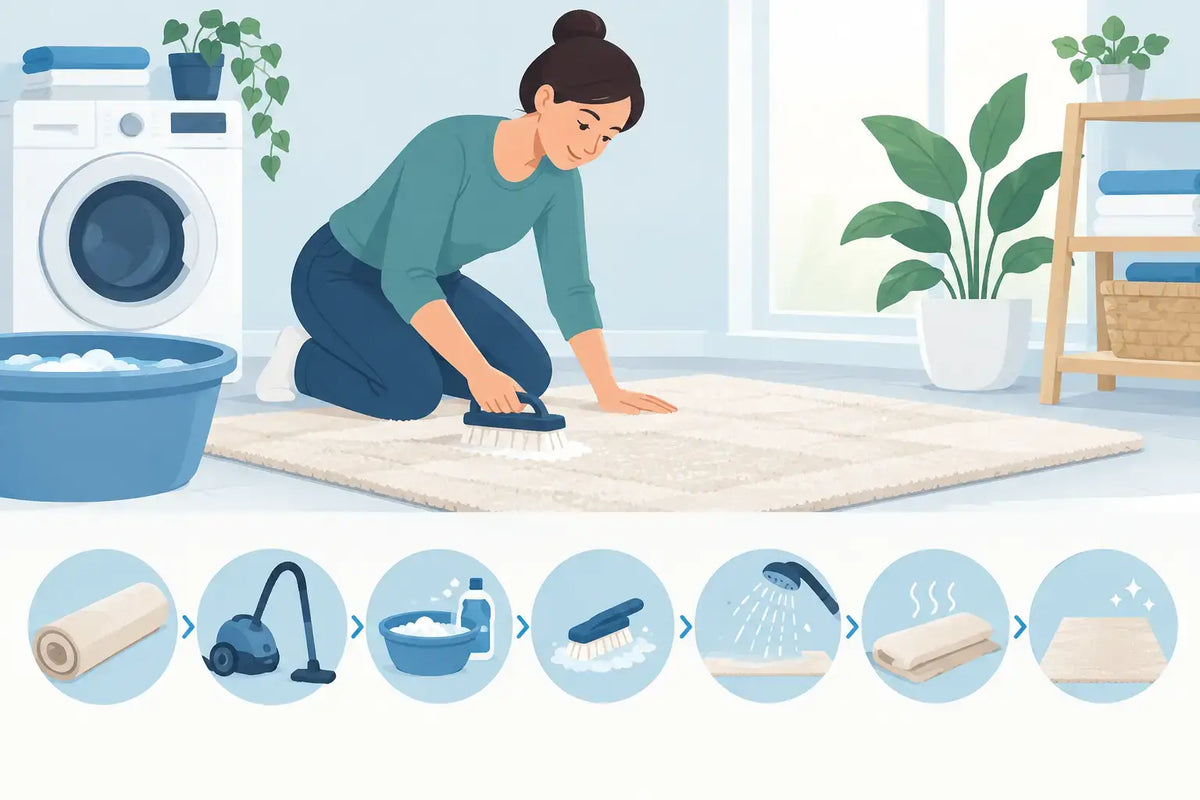
Washable models also deserve consideration. A low-maintenance rug can make life much easier, especially in a kitchen, playroom, or busy living space. Be sure to check the care instructions and your machine’s maximum load capacity. Washing a large rug is not practical in every home washing machine, even if the material itself is machine washable.
Choose the right size for a cohesive look
A beautiful retro rug can look small if the size does not suit the room. In the living room, it usually looks best when at least the front legs of the sofa and armchairs rest on the rug. This brings the seating area together and makes the room feel more spacious.
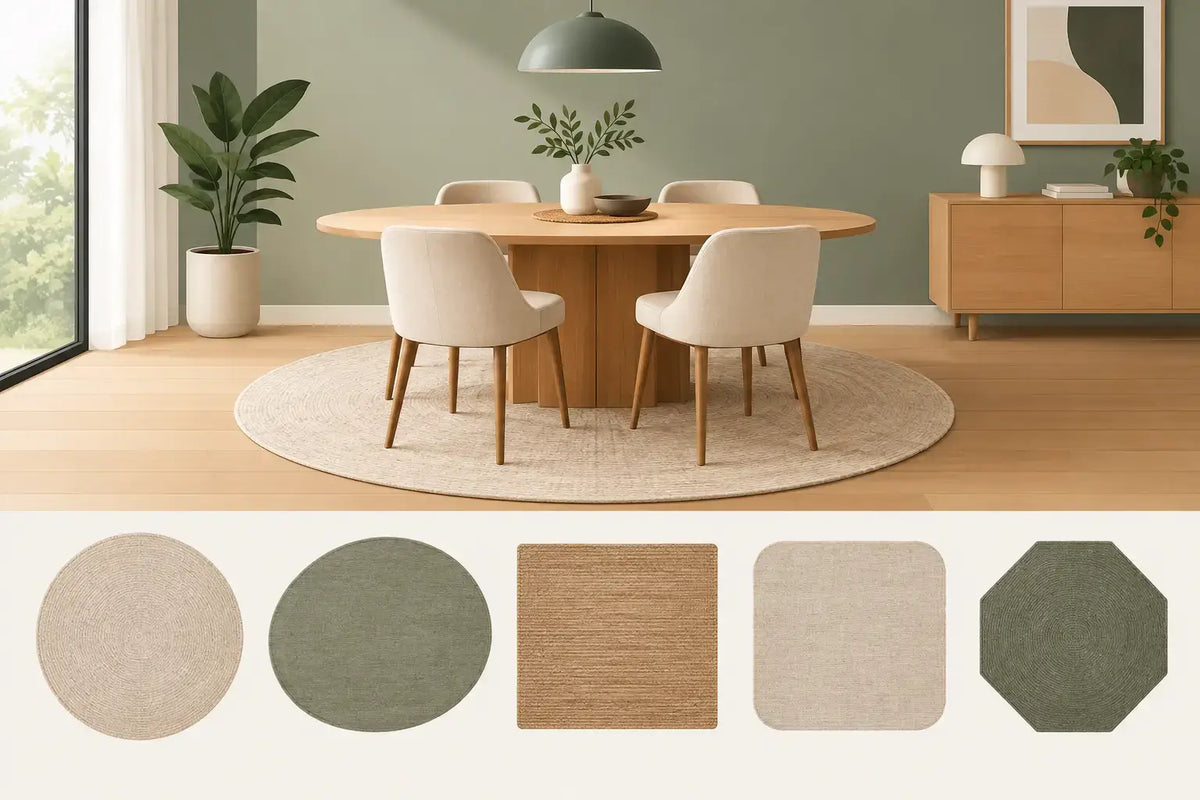
Under a dining table, the rug should extend far enough on every side to keep the chairs on it even when pulled out. As a general rule, allow around 60 to 70 centimeters of extra rug around the table. In a bedroom, a large rug under the bed feels comfortable when you get up, while two smaller runners beside the bed make for a lighter alternative.
Measure carefully beforehand and, if you like, mark out the desired size on the floor with painter’s tape. This simple trick quickly shows whether a rug will tie the furniture together nicely or leave too much floor exposed. Choosing a rug that’s too small is one of the most common interior design mistakes, even with the most beautiful retro print.
Pairing retro with your own interior style
The versatility of retro rugs lies in their ability to warm up a range of styles. In a modern interior with white walls and a light floor, a rug in terracotta, beige and black adds depth right away. In a country-style home, a distressed pattern in brown, green or red pairs beautifully with wood, linen and natural materials.
Retro can also work surprisingly well in a Scandinavian living room. Choose a calm base in cream or sand, with muted geometric accents. This preserves the room’s bright, peaceful look while keeping it from feeling cold. In a more classic interior, a more refined retro pattern in deep colors can provide a contemporary counterpoint.
A rug is also a smart way for renters to add atmosphere without making major changes. You don’t change the floor, but you do create a stronger sense of home. A bold pattern can even soften the look of an unattractive tiled floor or a somewhat cold laminate floor.
What should you look for before choosing?
Don’t just look at a photo of the rug; think about how you use the room. In a family living room, softness, a durable finish and easy care are often key. In a quiet reading nook, you can choose a more distinctive design. Under the dining table, a low-pile rug is generally more practical than a high-pile one.
Consider the flooring, too. An anti-slip solution is especially useful on a smooth floor. If you have underfloor heating, choose a rug that won’t unnecessarily block the heat, and avoid an overly thick underlay. If you have pets, mottled colors and a subtle pattern are often more forgiving than a completely plain, light-colored rug.
At Omid Carpets, families, interior design enthusiasts and practical shoppers can find retro-inspired rugs in a range of sizes, colors and easy-care materials. Choose a rug not just with your eyes, but with your everyday life in mind.
Above all, give yourself the freedom to choose what feels warm. Whether it’s a soft retro print in beige or a bold combination of orange and brown, the right rug turns a room into a place where you’ll want to sit a little longer.

Leave a comment
This site is protected by hCaptcha and the hCaptcha Privacy Policy and Terms of Service apply.