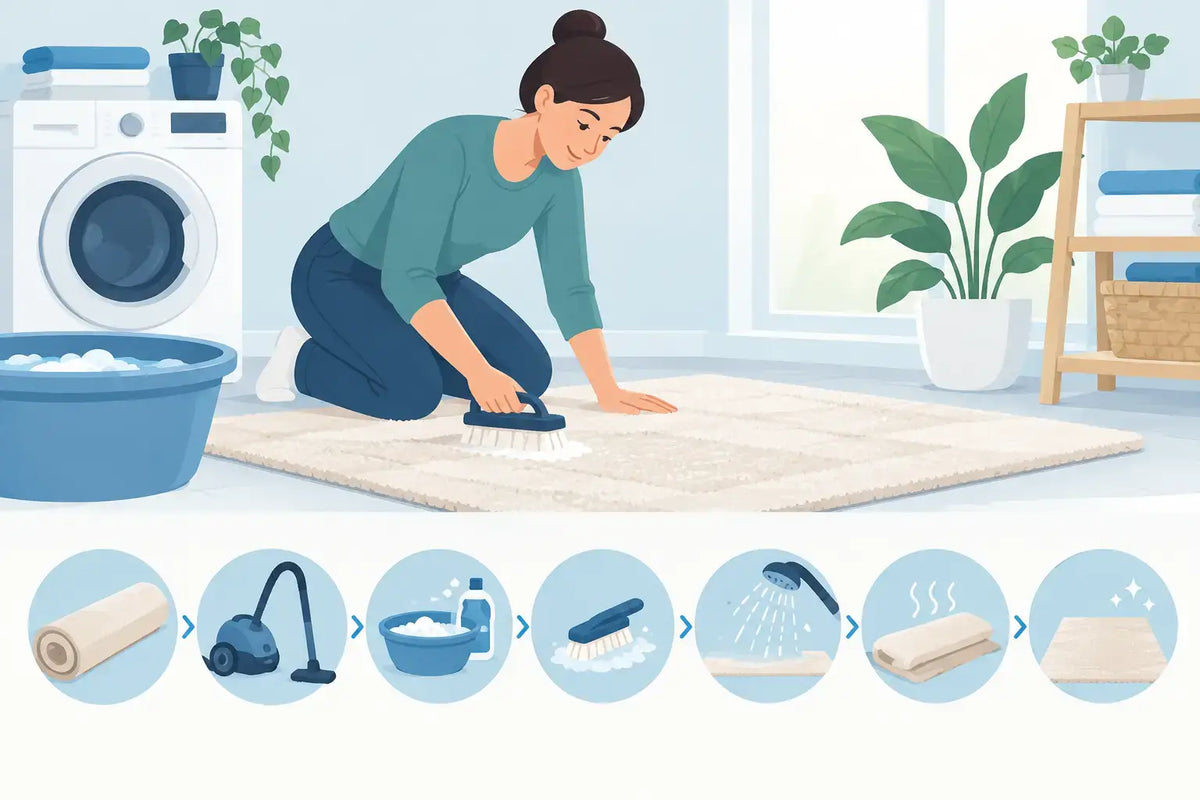
Washing a low-pile rug at home sounds simple until you’re faced with a large area rug, a stubborn stain, or an anti-slip backing. With the right approach, you can keep your rug fresh, soft, and beautifully colored without felting the fibers or damaging the backing. The most important starting point: always follow the care label first. Not every low-pile rug is suitable for machine washing, even if the material seems like it should be.
A low-pile rug is popular in busy homes because it traps less dust than a high-pile model and is generally easy to vacuum. But regular care is essential in a living room with children, an entryway where shoes are brought inside, or under the dining table. This keeps your interior warm and well cared for, while helping you enjoy your rug for longer.
Check first: can your rug be washed?
Before using water or detergent, check the care label. It usually tells you whether the rug is machine-washable, what temperature to choose, and whether it can go in the dryer. If it says “professional cleaning only,” washing it at home is not a wise experiment. Hand-knotted rugs, wool, viscose, vintage rugs, and rugs with delicate fringes in particular need different care.
Also check the rug’s backing. A washable low-pile rug with an anti-slip backing is especially practical, but a rubber or latex backing can become brittle if washed at too high a temperature, spun too fast, or exposed to prolonged heat. In that case, choose a low temperature and let the rug air-dry flat.
Size also matters. A small rug for the kitchen, bedroom, or children’s room often fits in the washing machine with no problem. A 160 x 230 cm area rug can become far too heavy once wet, even if it is technically washable. So check your washing machine’s maximum load capacity. An overloaded drum washes less effectively and can put strain on both the appliance and the rug.
Washing a low-pile rug at home: preparation
Good washing starts by removing dry dirt. Vacuum both sides thoroughly, preferably with a standard nozzle and without a rotating brush if the fibers are fine or delicate. Shake a smaller rug out outdoors. Otherwise, sand, hair, and crumbs get wet, sink deeper into the pile, and make cleaning unnecessarily difficult.
Pre-treat visible stains, but never scrub back and forth vigorously. This pushes coffee, sauce or mud further between the fibers. First, blot the spot with a clean, white cloth. Then use a small amount of lukewarm water with mild liquid detergent or a carpet-safe cleaner. Always test the product on an inconspicuous corner first, especially on dark colors, prints and natural fibers.
For a fresh stain, acting quickly works better than using a lot of product. Grease usually needs a drop of mild degreaser, while mud must dry completely before you vacuum it up. For pet urine or small accidents in a child’s room, an enzymatic cleaner is often a better choice than a heavily fragranced product. Always rinse away residue gently, as leftover soap attracts dirt again later.
How to machine-wash a washable rug
Roll the rug loosely and distribute it as evenly as possible in the drum. Ideally, wash it on its own so its colors and fibers don’t transfer to other laundry. Use a delicate or short cycle at 20 or 30 degrees, unless the care label says otherwise. Cold to lukewarm washing is generally gentler on the color, pile and any non-slip layer.
Choose a mild liquid detergent and err on the side of using too little rather than too much. Powder can sometimes leave white residue between short fibers. Fabric softener is usually unnecessary: it can leave a coating that makes a rug feel less fresh or attract dirt more quickly. A low spin speed is the safer choice, especially if the backing is coated.
Remove the rug from the machine as soon as the cycle ends. Don’t leave it rolled up in a damp drum, as this can quickly cause a musty smell. Check right away that all the stains are gone. Still see a spot? Treat it locally rather than automatically running another full cycle. Repeated washing puts more strain on the fibers than targeted treatment.
Hand-washing larger or delicate rugs
Is your rug too large for the machine but, according to the care label, suitable for wet cleaning? Then you can hand-wash it at home. Choose a clean, flat surface, such as a patio on a dry day or a spacious bathroom. Don’t soak the rug with a garden hose. Instead, use a damp sponge, soft brush or microfiber cloth and a solution of lukewarm water with a small amount of mild detergent.
Work in sections and use little water. Brush gently with the direction of the pile, then blot up the dirty suds with a clean, damp cloth. Don’t rinse aggressively. The goal is to clean the surface, not soak the rug. Too much moisture can greatly slow drying, especially with a cotton base or non-slip backing.
A carpet cleaner can be useful for a large synthetic low-pile rug, but the same rule applies: test a small area first and follow the appliance’s instructions. For wool, silk, viscose, or hand-knotted quality, professional cleaning is often the safest and best-looking option.
Proper drying prevents odors and loss of shape
Drying is just as important as washing. Lay the rug as flat as possible on a drying rack, clean towels, or a well-ventilated surface. Don’t hang it over a narrow rail: the weight of the water may stretch it and cause creases. Turn it over a few times while it dries so the backing gets enough air too.
Open the windows or use ventilation in the room. Direct, strong sunlight isn’t ideal for prolonged drying, as colors may fade and some backings may harden. Also avoid radiators and hot tumble dryers unless the care label explicitly allows them. The rug must be completely dry before it goes back on the floor. If the back still feels cool or damp, give it more time.
After drying, if needed, gently brush the pile with your hand or a soft clothes brush. This will give the rug an even, inviting appearance again. Only put it back once the floor underneath is clean and dry too.
Keeping it fresh between washes
Fortunately, if you vacuum regularly, you don’t need to wash a low-pile rug thoroughly very often. Vacuuming once or twice a week is usually enough for a busy living room. In a bedroom or quiet corner, less frequent vacuuming is fine too. Turn the rug halfway around now and then so that foot traffic marks and fading from daylight are distributed more evenly.
Under the dining table, acting quickly when spills happen helps. A good doormat does a lot of the work in the entryway. If you have pets, a quick daily check for hair and small stains is often easier than one big cleaning session at the weekend. A quality, washable low-pile rug gives families that practical freedom without compromising on atmosphere.
At Omid Carpets, you’ll find low-pile styles that combine comfort, style, and easy care, including practical designs with non-slip backing. When choosing, consider more than just color or size: think about your family’s lifestyle too. A soft, washable rug in a child’s room calls for something different than an elegant area rug beneath a simple coffee table.
A clean rug doesn’t have to be a complicated chore. Treat stains gently, use little water, and give the rug plenty of time to dry completely. That way, it remains a warm foundation for the moments that matter most at home.



Leave a comment
This site is protected by hCaptcha and the hCaptcha Privacy Policy and Terms of Service apply.