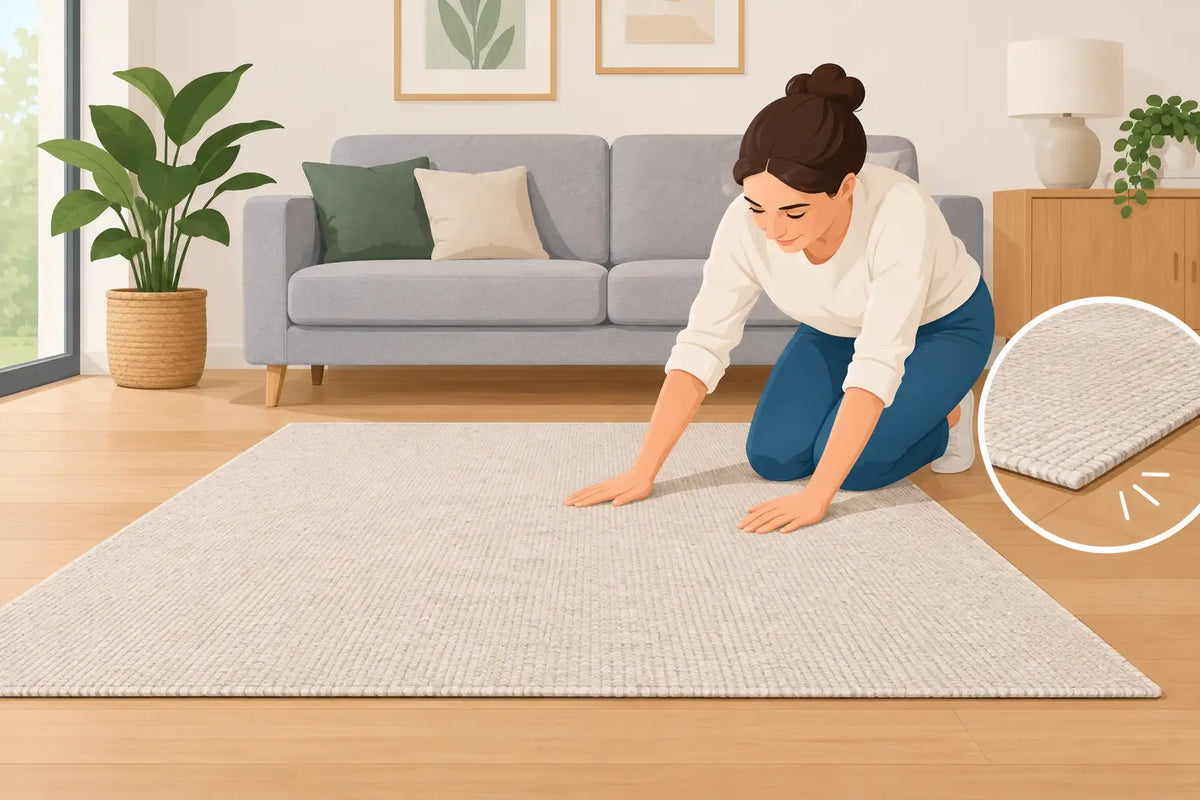
A rug that curls up on one side, lies crooked, or keeps shifting can quickly disrupt the calm of your interior. Fortunately, if you’re wondering, “How do I lay a rug straight?”, you don’t need to look for a complicated solution. With the right preparation, a little patience, and an underlay suited to your rug, it will lie flat, safely, and look great in your room again.
How do I lay a rug straight from the start?
Laying a rug straight starts before you unroll it. Especially when the rug is delivered rolled up, the material may retain the shape of its packaging for a while. So first lay the rug out in the room where it will go and give it at least 24 to 48 hours to relax. In a cool room or with a thicker, heavily woven rug, this may take a little longer.
Always unroll the rug on a clean, dry, level floor. Make sure there are no small toys, crumbs, or uneven spots underneath. Even a thin cable or a folded corner of an old underlay can later become visible and prevent the rug from lying flat.
Then check its position from several angles. A rug can intentionally sit at an angle in a playful interior, but in most living rooms it looks calmer when it runs parallel to the wall, sofa, or dining table. Use the grout lines of a tiled floor, parquet boards, or a long ruler as a visual guide. Measure the distance to the wall on the left and right if you want a really neat result.
Smooth out creases and curled corners
New rugs may have slight creases, ripples, or raised corners. This is normal and does not mean there is anything wrong with the rug. The fibers and backing need to relax again after being rolled up.
Start by laying the rug out completely flat. If the corners stay raised, place a flat, not-too-heavy piece of furniture on them for a few hours. For example, use a stack of books with a board underneath to distribute the weight evenly. Avoid sharp or small objects that could leave an impression in the pile.
Does that not help enough? Then gently roll the raised corner in the opposite direction. Do this loosely and only for a short time. This often works quickly with a low-pile, washable rug. With a hand-knotted rug, kilim, or thick wool rug, it is better to be extra patient and avoid making sharp folds. Natural materials need time and deserve gentle handling.
Heat can help, but use it carefully. A comfortably warm room will generally make the fibers more pliable. Never point a very hot hair dryer directly at the rug or run an iron over it. Direct, high heat can damage synthetic fibers and anti-slip backing in particular.
When does a crease remain visible?
If a deep crease remains after a few days, check whether the rug has been partly rolled or folded again during storage. Lay it completely flat and give it a little more time. If in doubt, avoid using harsh products, steam, or glue. This helps prevent permanent damage to the backing or fibers.
Prevent your rug from slipping
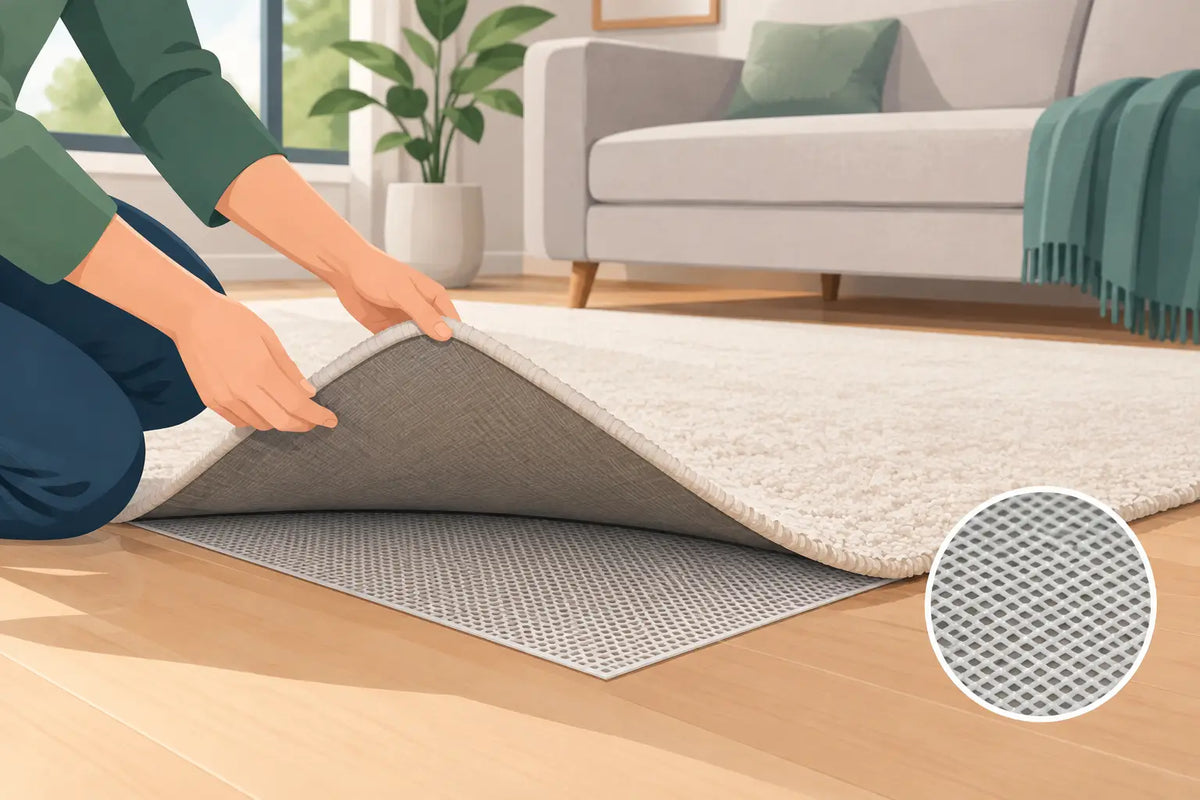
A rug will only stay looking good if it doesn’t slide around with every step. On smooth floors such as laminate, tile, vinyl, or hardwood, an anti-slip underlay is often the simplest solution. It provides grip between the floor and the rug without requiring you to attach anything to the floor.
Choose an underlay that is slightly smaller than the rug itself. This keeps it out of sight and lets the edges lie flat. If needed, trim the underlay to size, leaving a few centimeters of space all around. This is especially useful in a living room where the rug sits freely in the room, or in a child’s bedroom where people often run and play.
Some rugs already have an anti-slip backing. This is especially practical in busy family areas, but a flat, dust-free surface is still important. Dust or sand under the rug reduces grip and can eventually scratch delicate floors.
A rug naturally stays in place more securely under a sofa, coffee table, or dining table. Just make sure the furniture sits straight on the rug and not right on a raised edge. With dining chairs in particular, incorrect placement can cause the rug to shift a little each time. A larger size, where the chairs stay on the rug even when pulled back, is often more comfortable and looks better, too.
The right placement for each room
How to lay a rug straight also depends on the room and its function. In a living room, a rug works best as a unifying element. Ideally, let at least the front legs of the sofa rest on the rug. This makes the seating area feel more spacious and cohesive. Don’t place it too close to one wall unless that’s the effect you’re going for.
In the dining room, the table is your starting point. Center the rug under the table and check that all the chairs stay on the rug when you push them back. A rug that is too small not only looks less harmonious, but can also be inconvenient when chair legs catch on the edge.
Beside or under the bed, a soft rug makes for a warm start to the day. Center it under the lower part of the bed, or choose two narrow runners on either side. Measure beforehand, because a rug that’s just a few centimeters out of line is more noticeable by a bed than you might think.
Safety comes first in a child’s room. Choose a flat, easy-to-maintain rug with good grip, and check regularly that all the edges lie flat. A soft rug makes playing on the floor more comfortable, but it shouldn’t become a tripping hazard.
Common mistakes that throw a rug off
The most common mistake is acting too quickly. There’s rarely any need to stick down, put heavy items on, or force a newly unpacked rug into place straight away. Let it acclimatize first, especially after transport in cold or damp weather.
A rug that’s too small can also make it feel like it’s crooked. When a rug floats alone in the middle of a large room, there’s no clear anchor point. A larger size creates a calmer look and makes placement easier. That doesn’t mean bigger is always better: in a compact room, enough floor should remain visible around the rug to keep the space feeling airy.
Finally, it’s wise to be careful with double-sided tape on delicate wooden floors. Tape can leave adhesive residue or damage the finish. A quality anti-slip underlay is usually a safer alternative, especially if you may want to change your interior later.
Keep your rug flat
Vacuum your rug regularly and remove any dirt underneath when you lift it. Sand and small particles can make it less stable and wear it out faster. Rotate the rug by half a turn every few months if it gets a lot of foot traffic. This distributes light exposure and wear more evenly, especially for a large living room rug.
Do you have a washable rug? Always follow the care instructions and let it dry completely flat after washing before putting it back. A rug that is still damp may develop creases or may not grip an anti-slip underlay as well.
A rug should make your home softer, warmer, and more personal. So feel free to take a few extra minutes to let it settle, align it carefully, and stabilize it properly. At Omid Carpets, we believe the most beautiful interiors are about more than colors and patterns: they’re also about that pleasant feeling when everything is just where it belongs.


Leave a comment
This site is protected by hCaptcha and the hCaptcha Privacy Policy and Terms of Service apply.