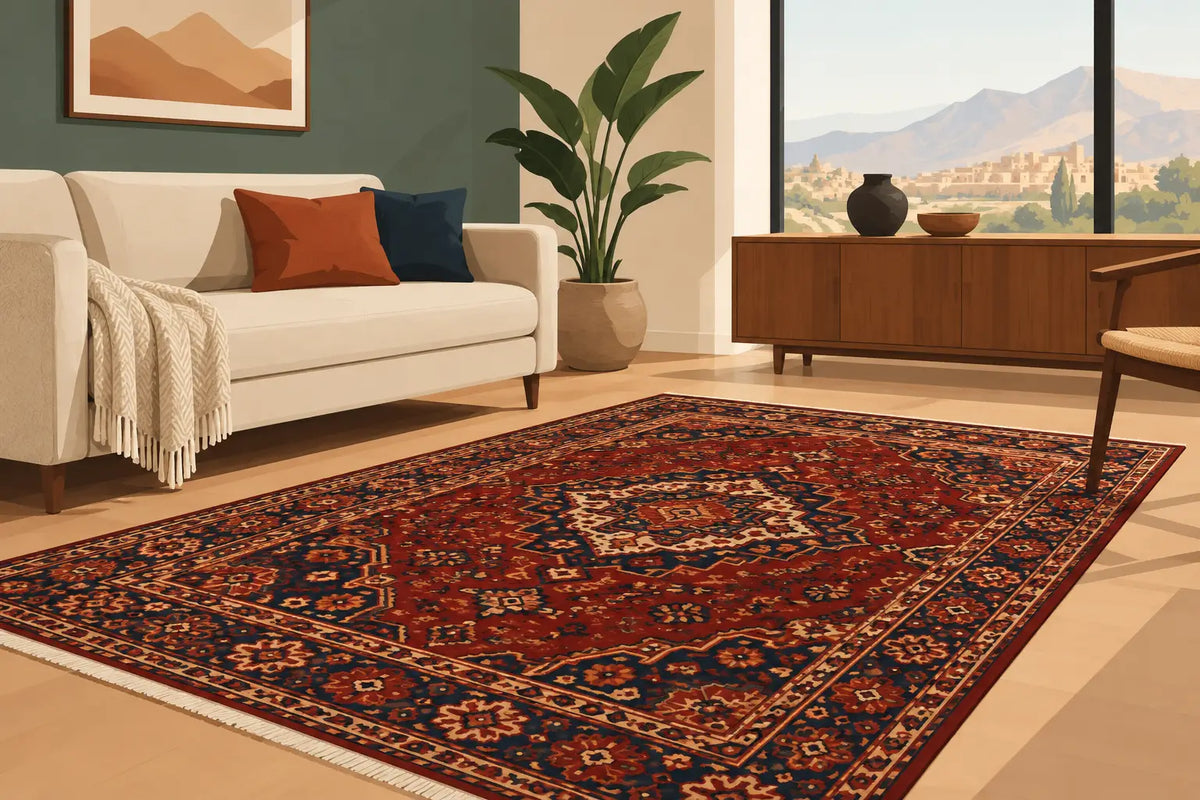
A living room is transformed as soon as an authentic Afghan rug is laid on the floor. Its deep red tones, delicate motifs, and tactile texture give a room something a standard area rug rarely achieves: character that feels completely natural. It is not an accessory that simply fills an empty space, but a piece of craftsmanship that brings warmth, calm, and history together.
For anyone who loves an interior with soul, an Afghan rug is a wonderful choice. At the same time, it is wise to look beyond just the color or price. What makes a rug truly authentic, which style suits your home, and how do you choose one you will be happy to look at and live with for years?
What makes an authentic Afghan rug special?
Afghanistan has a rich rug-making tradition passed down from generation to generation. Many rugs are hand-knotted, often by skilled artisans who know patterns, color combinations, and techniques inside and out. You can see this craftsmanship in the subtle details: a motif feels lively rather than machine-perfect, the colors have greater depth, and the pile feels luxurious underfoot.
Wool is generally the main material. Good wool feels pleasantly soft, yet is resilient enough for a busy living room. In some versions, cotton forms the foundation of the rug. There are also more luxurious options with silk accents, which add extra sheen and refinement. The best choice mainly depends on the room and how you use the rug.
Authenticity is not defined solely by a geographical label. A truly valuable Afghan rug embodies recognizable techniques, traditional design language, and careful craftsmanship. Since styles, materials, and production methods vary by region and workshop, personal advice is valuable. This helps you understand what you are buying and choose a rug that suits your expectations.
Recognizable styles with their own character
Anyone who thinks Afghan rugs always look heavy and traditional will be surprised by the variety. Some designs are bold and decorative, while others are calm enough for a modern Belgian interior.
One well-known style is the Khal Mohammadi rug. This type often stands out for its warm red, burgundy, or rust-brown tones, combined with delicate geometric patterns. The result is elegant and full of depth. In a living room with a beige sofa, wooden furniture, or soft linen curtains, it creates a warm contrast that gives the space more character.
Baluch rugs also spark the imagination. They are often darker in color, with shades of deep blue, brown, black, and red. Their patterns can appear geometric, refined, and almost graphic. As a result, they work not only in a classic interior, but also beautifully in a home with black accents, walnut wood, or a simple, modern foundation.
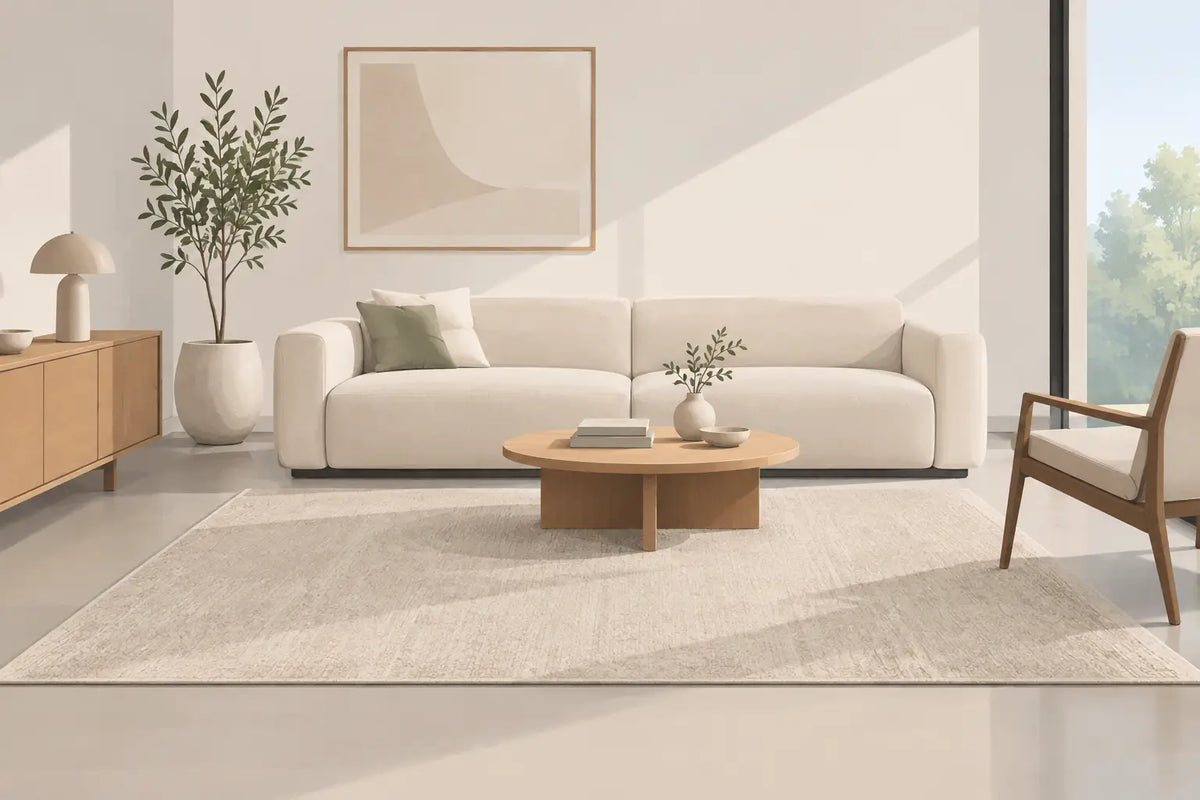
If you prefer a lighter, calmer look, choose a rug in sand, cream, soft gray, or faded red. These colors let traditional patterns speak without letting the floor dominate the entire interior. This is often a good solution in smaller rooms or homes that already have a lot of color.
Choose the function first, then the design
A beautiful pattern naturally draws the eye, but the right choice starts with where the rug will go. In the sitting area, a rug should be more than just decorative. It brings the sofa, coffee table, and armchairs together and softens the room acoustically. Here, it’s better to choose a generous size than a rug that’s too small and sits like a lonely island in the room.
With a dining table, the practical clearance matters most. The rug should be wide and long enough for chairs to stay on it even when pulled out. A fine, low pile is generally more practical here than a very thick, soft rug. That makes chairs easier to move and maintenance more manageable.
Comfort can take priority in the bedroom. An authentic rug beside or under the bed feels pleasant when you get up in the morning and immediately adds a sense of coziness. A smaller size on both sides of the bed can make a big difference here, especially if you don’t want to cover the entire floor.
For families, balancing appearance and ease of use is essential. A hand-knotted wool rug is durable, but requires different care than a washable low-pile rug. In a quiet living space, that extra care can absolutely be worth it. In a playroom or with a young puppy, an easy-care alternative can sometimes be wiser. A cozy atmosphere and practical living can certainly go hand in hand.
Color and size set the tone for your interior
An Afghan rug doesn’t have to be exactly the same color as your cushions or curtains. In fact, an interior often feels more layered when the rug introduces a related, but not identical, shade. For example, pair a reddish-brown rug with sand-colored walls, cognac leather, and a few dark red accents. This creates a cohesive look without making everything too predictable.
In a bright, modern living room, a darker rug can visually anchor the space. It gives furniture more weight and makes a large, open room feel cozier. In a smaller room, a softer foundation works better. Choose a refined pattern with enough light areas so the floor doesn’t look too heavy.
Always measure before falling in love with a size. Use painter’s tape or lay newspapers on the floor to mark out the dimensions. You’ll quickly see whether the rug reaches far enough under the sofa’s front legs, whether the walking space remains practical, and whether a dining table is nicely centered. This little bit of preparation prevents disappointment after delivery.
Look for these signs of quality
With a hand-knotted rug, you can look, feel, and compare. The back often reveals a lot: the individual knots and the pattern are usually visible there. An even, solid finish shows care in the making. The edges and fringes also deserve a look, as they should be securely and neatly finished.
Knot density affects the level of detail. A more finely knotted rug can feature more complex patterns, but a lower knot density doesn’t automatically mean less beauty or lower quality. A sturdier, village-inspired rug can draw its charm from a bolder structure. So don’t choose based only on technical specifications, but also on the look you want to bring into your home.
Also pay attention to the wool. A natural character, subtle color variations, and a slight sheen can be appealing qualities. Handcraft is never completely uniform. Small variations aren’t flaws, but proof that your rug isn’t a machine-made copy.
Keep your rug beautiful for years
With regular care, a wool rug stays fresh and beautiful. Vacuum gently using a suitable setting, and avoid an aggressive rotating brush on delicate fibers or fringes. Turn the rug occasionally so sunlight and foot traffic are distributed more evenly.
For a fresh stain, one simple rule applies: blot immediately, don’t rub. Use a clean, slightly damp cloth and work from the outside toward the center. Too much water or a strong cleaning product can damage the fibers and colors. For stubborn stains or a full deep clean, professional advice is the safest choice.
A good anti-slip underlay is also worth considering, especially on smooth floors. It helps keep the rug stable, protects its underside, and often adds a little extra comfort. At Omid Carpets, we’re happy to help you find a size, style, and solution that not only looks beautiful but also works well in your everyday life.
A carefully chosen Afghan rug deserves to be seen, but it doesn’t have to look expensive in the aloof sense of the word. Let it become part of your home: beneath playing children, beside a comfortable sofa, and in the conversations you share there with family and friends. That’s when craftsmanship truly finds its finest place.


Leave a comment
This site is protected by hCaptcha and the hCaptcha Privacy Policy and Terms of Service apply.