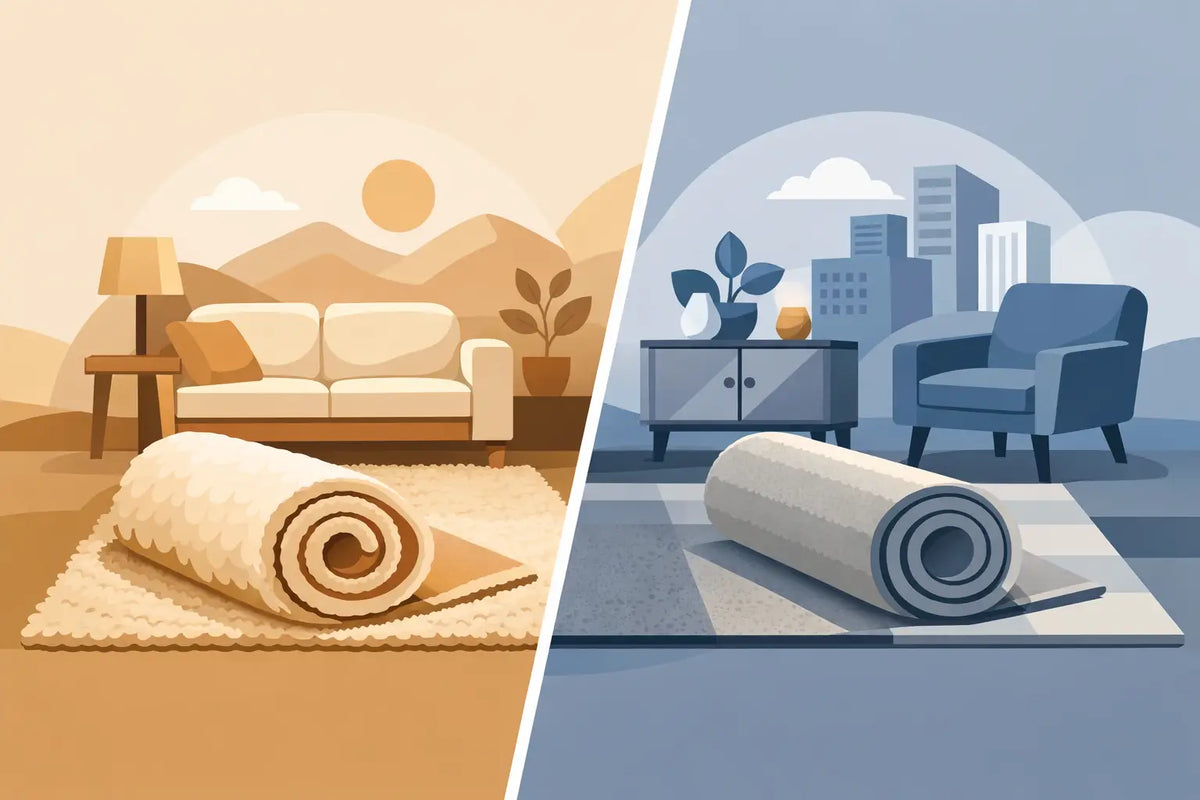
A rug is about more than the colour of your interior. You feel it under your feet every morning, it softens the sound of children playing and turns a sitting area into a place where you enjoy lingering. But should you choose a wool rug or synthetic rug? Both materials have strong advantages. The best choice depends on your space, your family and how much maintenance you are comfortable with.
Wool rug or synthetic rug: the difference in feel
A wool rug has a natural, full appearance. Wool feels warm, has excellent resilience and immediately adds softness to a living room or bedroom. The fibres are naturally slightly wavy, giving a wool rug a lively surface. This works beautifully in a warm, timeless or luxurious interior, but just as well in a modern home that could use some extra character.
Synthetic rugs are usually made from materials such as polypropylene, polyester or polyamide. They are available in an exceptionally wide range of colours, patterns and textures: from a calm beige low-pile runner to a striking vintage rug. There are also many options when it comes to feel. A high-quality synthetic shaggy rug can be surprisingly soft and comfortable, often at a more accessible price.
If you mainly dream of a natural material with a rich appearance, you will often be drawn to wool. If you are looking for a low-maintenance solution that can effortlessly handle everyday family life, synthetic fibres are generally a good choice.
Comfort and warmth: where wool excels
Wool has excellent insulating properties. It helps a room feel warmer and cosier, which is particularly pleasant on tiled floors, parquet or laminate. In a bedroom, a wool rug provides that luxurious, soft feeling when you get out of bed. It can also noticeably improve the acoustics in a spacious living room: voices sound less harsh and the room feels calmer.
An important advantage is wool’s natural resilience. The fibres often spring back after furniture has been standing on them temporarily. As a result, a quality wool rug can stay beautiful for a long time, even in a living space that is used every day. Wool also absorbs moisture and releases it again, contributing to a pleasant indoor climate.
On the other hand, wool is somewhat more sensitive to stains than many synthetic materials. A glass of red wine, chocolate milk or muddy paw prints therefore require quick action. Not every stain becomes a problem, but postponing treatment is rarely a good idea with a wool rug.
Synthetic rugs for a busy family
In a family with young children, pets or lots of foot traffic, a synthetic rug is often the most carefree choice. Polypropylene, for example, is colourfast, durable and highly resistant to moisture. You can carefully blot many stains with a damp cloth and a mild cleaning agent. This makes the material particularly suitable for the dining area, playroom or sitting area.
Synthetic rugs are also interesting for rental properties and first interiors. You can easily choose a generous size or a distinctive design without putting too much pressure on your budget. Want to try a different interior style after a few years? The step towards a new synthetic rug is smaller.
Do pay attention to the quality of the finish. A cheap rug may flatten more quickly or feel less pleasant. So do not look only at the price, but also at the pile height, density, edge finishing and backing. An anti-slip backing, for example, is particularly useful on smooth floors, especially in a home where children run around.
Washable does not mean worry-free
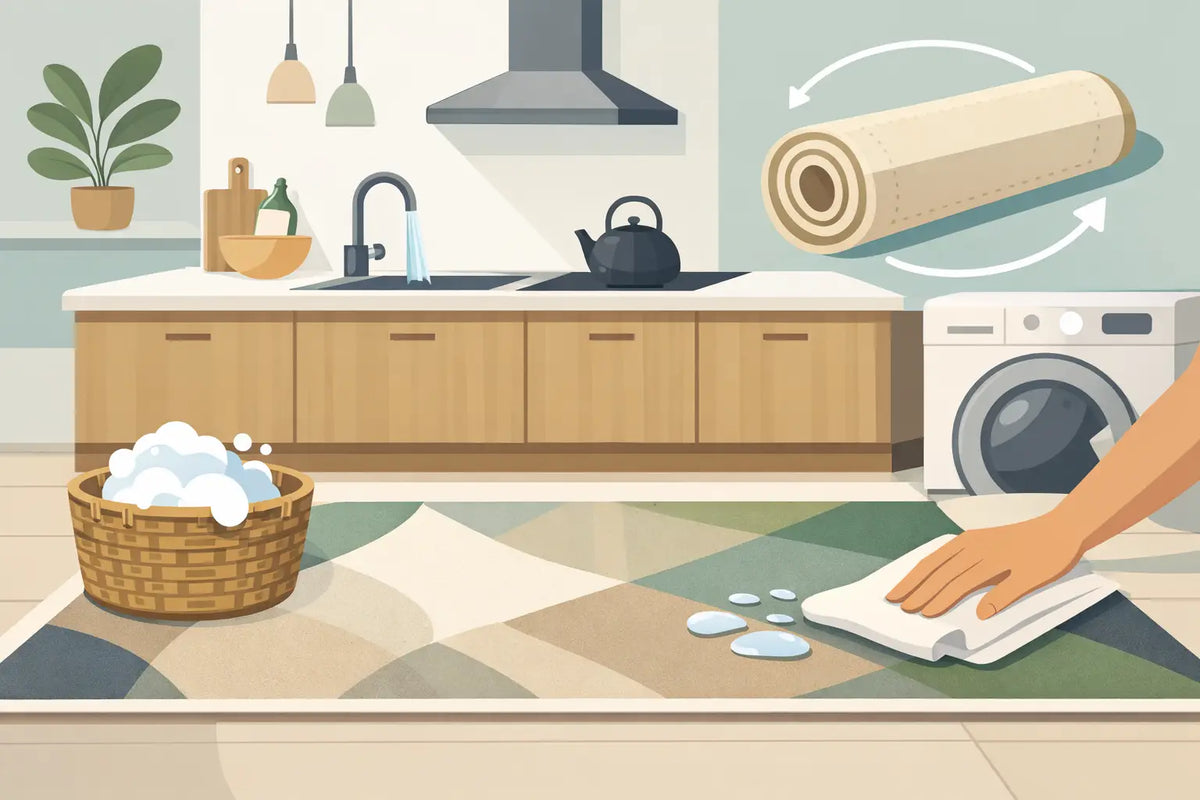
Some synthetic rugs are washable, which can be a huge advantage in a kitchen, children’s room or home with pets. However, always check the care label and the maximum capacity of your washing machine. A large rug will not automatically fit in every drum.
A washable model will also stay beautiful for longer if you vacuum it regularly, treat stains immediately and turn it occasionally. This distributes the effects of sunlight and walking routes more evenly.
Price and lifespan: look beyond the purchase price
A wool rug generally costs more than a comparable synthetic model. This difference is due to the natural material, the processing and often the higher density. Do you see the rug as a purchase for many years and are you choosing a room where it will not constantly be exposed to stains? Then wool can certainly be worth the price.
Synthetic rugs, on the other hand, offer excellent value for money. On an affordable budget, you can find attractive, soft and practical models in various sizes. Especially if you like to change your style regularly or are looking for a rug for intensive use, this is a smart investment.
Lifespan is therefore not a simple competition between the two. A well-maintained wool rug in a quiet bedroom can remain beautiful for decades. A durable synthetic rug in a busy living room may retain its appearance for longer than a wool rug that has to deal with many stains and moisture every day. Where you place the rug makes at least as much difference as the material itself.
Which choice suits each room?
In the bedroom, comfort is usually the deciding factor. A wool rug or a soft synthetic high-pile model provides warmth and a peaceful atmosphere. Anyone who is sensitive to cold floors will feel the difference every day.
For the living room, your lifestyle is the deciding factor. Do you have a quiet home and love natural materials? Then wool makes a beautiful centrepiece beneath the coffee table. Do you have children or pets, or do people often eat and drink in the sitting area? Then feel free to choose synthetic, for example a low-pile model that is easy to vacuum.
Under the dining table, a low-pile synthetic rug is often the most practical option. Chairs slide more easily, crumbs get caught less often and accidents are resolved more quickly. Avoid a very high-pile texture here, regardless of the material.
In a children’s room, synthetic usually wins on ease of use. A soft, washable rug with an anti-slip backing creates a lovely play area without having to stress over every marker, snack or craft project. For the hallway or entrance, it is also best to choose a hard-wearing, low-pile rug that makes dirt less visible.
Pay attention to these details before ordering
Material is important, but a beautiful result only comes together when the size, colour and texture are right. A rug that is too small can quickly make a living room feel unsettled. It is better to choose a size on which at least the front legs of the sofa and armchairs can rest. In the bedroom, a larger rug looks beautiful when it extends far enough on both sides of the bed.
Also think about the colour in relation to your daily life. A cream-coloured wool rug is beautiful, but it requires more attention in a home with a dog that often goes outside. A mottled pattern or a slightly darker shade hides small stains and dust better. That does not mean you have to compromise on style—it means choosing beauty that suits your rhythm.
Still hesitating between two materials? Ask yourself one honest question: do I mainly want to enjoy natural luxury, or do I want a rug that can live alongside us without too many worries? At Omid Carpets, we are happy to help you choose, taking your interior, budget and everyday use into account.
A rug does not have to be perfect for every home. Above all, it needs to be right for your home: warm underfoot, beautiful in the space and practical enough to enjoy every day without worry.


Leave a comment
This site is protected by hCaptcha and the hCaptcha Privacy Policy and Terms of Service apply.