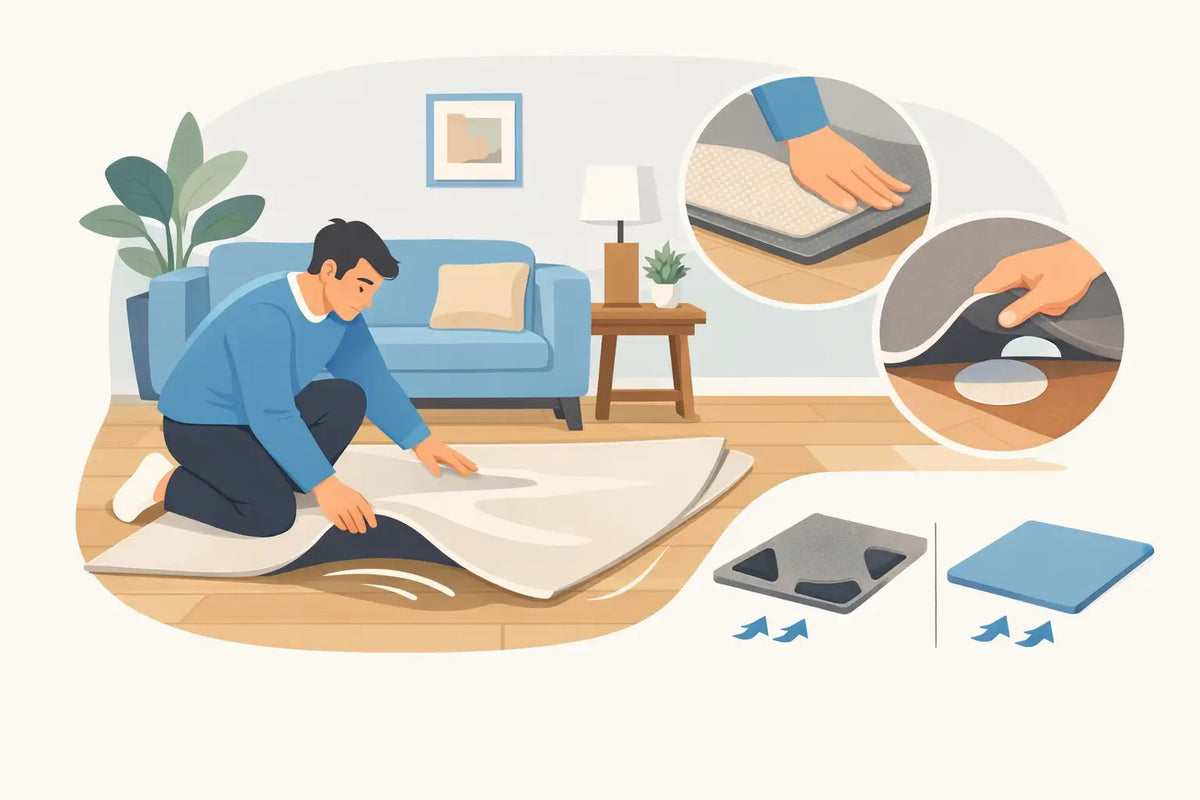
A rug should bring warmth, softness, and atmosphere. It should not unexpectedly slide out from under the sofa as soon as someone walks over it. Are you wondering: why does my rug slide? This is usually not due to a single issue, but to a combination of your floor, the rug’s material, its dimensions, and everyday use. Fortunately, a sliding rug is easy to solve in most homes.
Why does my rug slide?
A rug needs grip to stay neatly in place. On soft floor coverings, this often happens naturally, but on a smooth surface such as parquet, laminate, tiles, vinyl, or polished concrete, the situation is different. Every step, children playing, a dog enthusiastically running through the living room, or a chair being moved can shift the rug by several centimetres.
The underside of the rug also plays a role. A smooth backing made of cotton, polyester, jute, or a fine-woven structure has less grip than a model with an anti-slip layer. Light rugs without furniture placed on them are especially prone to sliding. Think of a small rug in the hallway, in front of the bed, or beside the sofa.
Finally, the size makes a big difference. A rug that is too small lies loose in the room and is more easily moved. A larger rug with the front legs of the sofa or chairs resting on it generally stays in place much better. This not only looks calmer and more luxurious, but also improves comfort and safety.
The surface matters more than you think
Not every floor requires the same solution. On smooth ceramic tiles and laminate, a lightweight rug can move particularly quickly, especially when it has little texture on the underside. With wooden floors, you also want to prevent an underlay from retaining moisture or causing discolouration. Therefore, always choose a solution suitable for your specific floor finish.
Caution is also important with vinyl and PVC. Depending on their composition and the floor, some rubber-like anti-slip mats can leave a mark over time. Therefore, test a new product first on a small, inconspicuous area of the floor and follow the manufacturer’s care instructions.
Sliding is less common on fitted carpet or carpeting, but a small loose rug can also move there if its underside is very smooth. A thin anti-slip underlay usually provides sufficient grip without making the rug feel unnaturally high.
Take care with underfloor heating
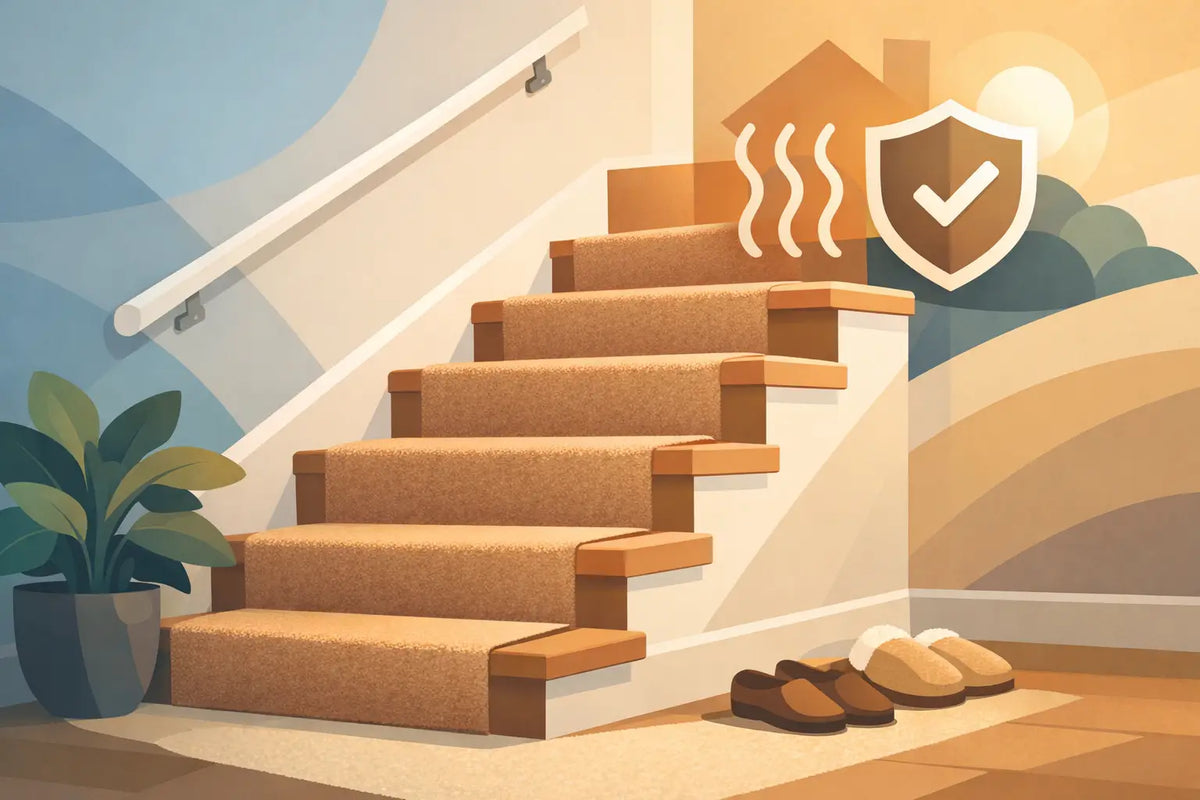
Do you have underfloor heating? Then ventilation beneath the rug is important. Do not choose a completely sealing, thick underlay that blocks heat. A high-quality, perforated anti-slip mat is often a better choice: it helps prevent sliding and allows heat to circulate more effectively. When in doubt, always check whether both your rug and underlay are suitable for underfloor heating.
How to prevent your rug from sliding
The most reliable solution is a made-to-measure anti-slip rug underlay or mat. Place it between the floor and the rug. The mat creates grip on both sides, reducing movement, helping the rug lie flatter, and making it more pleasant underfoot. An additional benefit is that the underlay can help limit wear, as the rug rubs less against the floor.
Cut the underlay slightly smaller than your rug, approximately one to two centimetres on each side. This keeps it invisible and reduces the risk of the edges curling upwards. Make sure the floor is clean and completely dry before placing the mat. Dust, grains of sand, or a damp spot reduce the grip and can cause damage over time.
Do you not have an underlay at home and need a temporary solution? Anti-slip corner grips or double-sided rug tape can help. Tape is particularly suitable for small, lightweight rugs that are not moved often. However, keep in mind that adhesive residue may be undesirable on certain floors. For a rental property, a delicate wooden floor, or an expensive natural-stone surface, a loose anti-slip mat is often the safer choice.
A heavier rug is another practical option. Materials with a denser pile, a firmer backing, or greater weight generally stay in place better than ultra-light models. This does not mean that every thick rug is automatically anti-slip. Even a heavy rug can still move slightly on very smooth tiles. The combination of a suitable rug and a good underlay produces the best result.
Choose a size that helps anchor your furniture
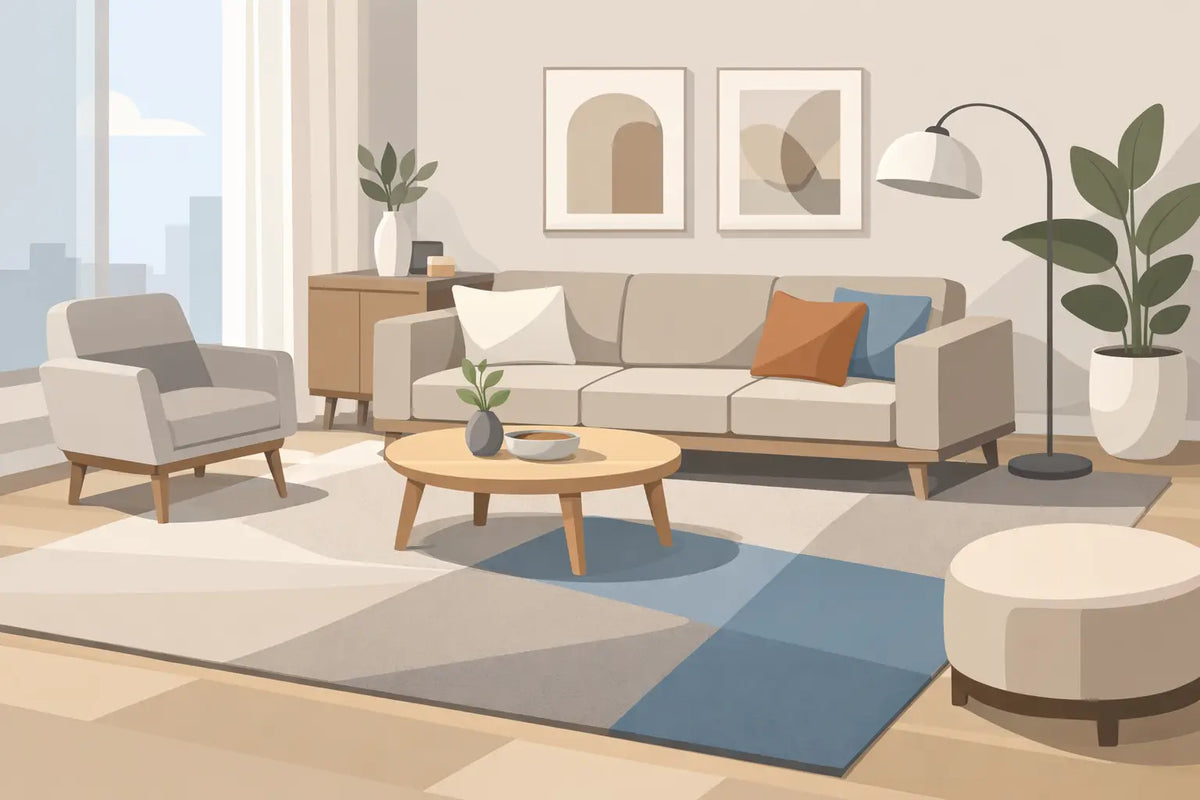
In the living room, the placement of your rug is at least as important as its underside. A small rug lying completely free in front of the sofa slides more easily than a larger one on which the sofa’s front legs rest. The weight of the furniture naturally helps anchor the rug.
Under a dining table, the rug should be wide enough for the chairs to remain on it even when pulled backwards. A rug that is too small moves every time a chair is shifted, and the curling edge can be inconvenient. Choose enough extra space around the table for the chairs on every side.
In the bedroom, a large rug extending partly under the bed looks particularly attractive. It creates a calm, hotel-like appearance and stays more stable thanks to the weight of the bed. Would you rather use two smaller runners beside the bed? Be sure to use anti-slip protection, as these lightweight rugs endure a lot of foot traffic every day.
When is a rug with an anti-slip backing a smart choice?
A rug with an anti-slip backing is a comfortable choice for rooms where safety and convenience are paramount. Think of the entrance hall, kitchen, children’s room, bedroom, or an apartment with many smooth floors. You avoid the need for a separate underlay, and the rug immediately stays more firmly in place.
This is especially useful for families with young children. Children often play, run, and sit on the floor. A stable, soft rug makes the room cosier and reduces the risk of the rug unexpectedly sliding away. For older residents or people with reduced mobility, good grip is not a minor detail but a reassuring choice.
Do pay attention to maintenance. A washable, low-pile rug with an anti-slip layer is particularly practical, but always check the washing instructions. High temperatures, aggressive products, or incorrect drying can reduce the anti-slip effect. Allow the rug to dry completely after cleaning before placing it back down.
Also check the condition of your current rug
Has your rug only recently started sliding? Then take a look at the underside. With use, dust, and cleaning products, the backing can become smoother. Therefore, do not only vacuum the top; also remove dust from underneath the rug from time to time. Roll it up, clean the floor, and allow everything to dry thoroughly before putting it back.
Also check whether the corners are lifting or the edges are curling. This can happen after transport, prolonged rolling, or a change in temperature at home. Leave the rug upside down for a while, temporarily place a flat weight on the corners, or use a suitable anti-slip underlay to help it lie flat again. For hand-knotted rugs and kilims, an underlay is often a particularly worthwhile investment: it protects the structure and supports the rug’s natural character.
A rug that keeps sliding does not always require a new rug. Sometimes a good underlay, a better size, or a different placement is all that is needed. Is your rug worn, too light for the room, or difficult to maintain? Then a new model with an anti-slip backing can make a noticeable difference to everyday comfort.
At Omid Carpets, we are happy to help you choose a rug that not only suits your interior, but also stays comfortable and safely in place. Because the most beautiful living room only truly feels complete when you can walk barefoot over a soft, stable rug without a care.

Leave a comment
This site is protected by hCaptcha and the hCaptcha Privacy Policy and Terms of Service apply.