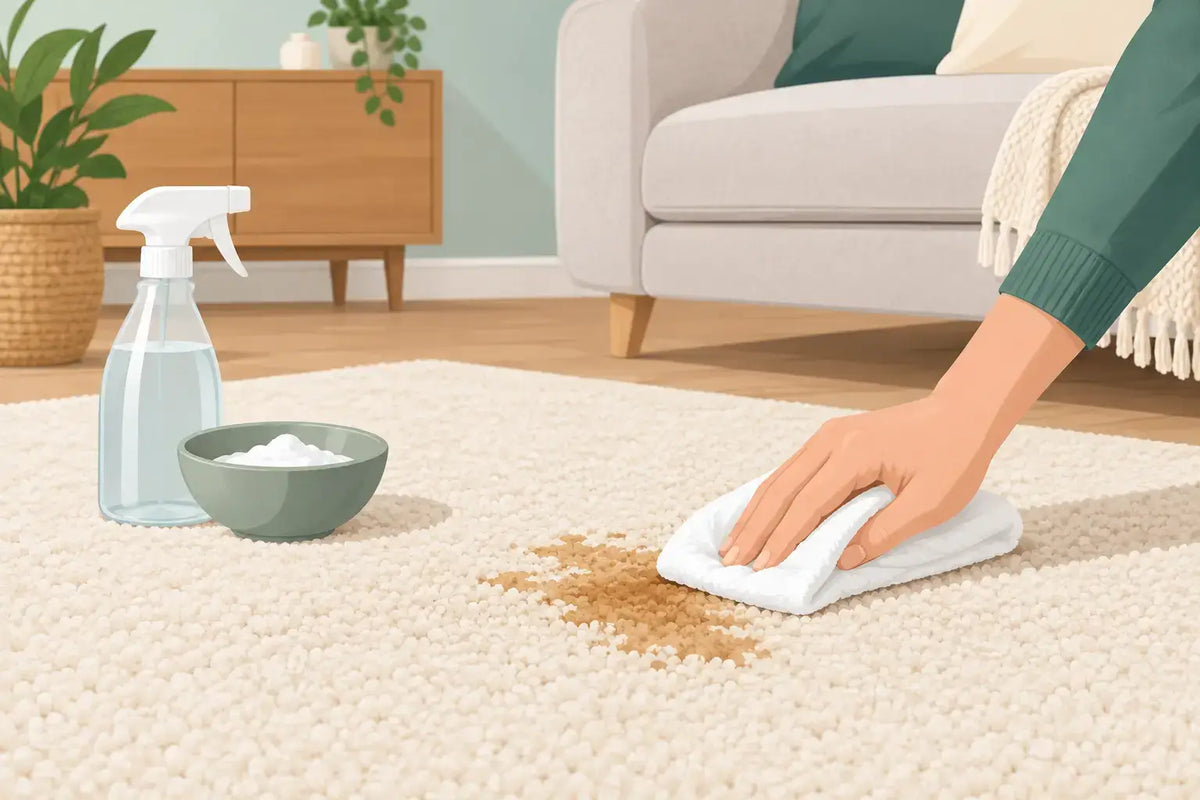
A glass of red wine knocked over, muddy footprints after an autumn walk or a coffee stain during a busy morning: it happens sooner than you think. Removing stains from wool carpets calls for a calm, gentle approach. Wool is a beautiful natural material with a warm look, but harsh cleaning products and too much water can damage the fibers or leave an unsightly mark.
The good news? Acting quickly and using the right technique can safely remove many fresh stains from a wool rug. Below, you’ll find out what to do straight away, which products are suitable and when it’s best to call in a specialist.
Why a wool carpet reacts differently
A wool carpet feels soft, is naturally resilient and instantly adds depth and warmth to an interior. At the same time, wool fibers have a natural protective layer that does not always prevent dirt from soaking in right away. This is an advantage, as long as you do not rub the stain further into the fiber.
Wool also holds onto moisture longer than many synthetic materials. Cleaning a stain by soaking it can lead not only to a water mark, but also to distortion, discoloration or a musty smell. With hand-knotted and classic carpets, the dyes also play a role: some colors can bleed when they come into contact with water or a harsh product.
So the golden rule is simple: blot gently, use very little moisture and test any cleaning product on an inconspicuous corner first.
Removing stains from wool carpets: the first few minutes
A fresh stain is always easier to treat than a dried one. So grab a clean, white cotton cloth or paper towel straight away. White is important because a colored cloth can transfer dye onto a light-colored carpet.
Blot the liquid from the outside of the stain towards the center. This prevents the stain from spreading. Press gently and replace the paper towel as soon as it has absorbed the moisture. Rubbing may be tempting, but it pushes the dirt deeper into the pile and can make the wool fibers fluffy.
Has something thick or solid fallen onto the carpet, such as sauce, chocolate or mud? First, remove as much as possible with a spoon or the blunt side of a knife. Always work in the direction of the fibers and do not pull any loose threads.
Use a little lukewarm water
Once most of the liquid has been absorbed, you can lightly dampen a clean cloth with lukewarm water. Blot the stain again, then absorb the moisture with a dry cloth. Never use hot water. Heat can set protein-based stains, such as milk, blood or yogurt.
Then let the rug air-dry. Don’t put it on a radiator or use a hot hair dryer. Slow, even drying is safest for a wool rug.
Which Cleaning Product Is Safe for Wool?
For light, fresh stains, lukewarm water is often enough. If a mark remains, you can use a small amount of pH-neutral wool detergent. Mix a few drops with water, never apply the mixture directly to the rug, and use only the foam or a minimally damp cloth.
Then blot the treated area with a cloth lightly dampened with clean water. This removes any soap residue. Carefully dry it again with a dry towel, pressing gently.
Avoid all-purpose cleaners, bleach, chlorine, ammonia, strong degreasers, and products with a lot of perfume. Vinegar and baking soda are also often suggested as home remedies, but they aren’t a safe choice for every wool rug. Vinegar can affect the color, and baking soda can remain as powder between the fibers. Extra care is needed with a valuable, hand-knotted, or antique rug.
How to Treat the Most Common Stains
Coffee, Tea, and Soft Drinks
Blot up the spilled drink immediately. Then treat the spot with a slightly damp cloth and, if needed, a little pH-neutral wool detergent. Work gently, and repeat a few times with a little moisture rather than once with a wet cloth. With coffee containing milk, it’s especially important to act quickly, as grease and protein residues can remain.
Red Wine
Every minute counts with red wine. First blot up as much wine as possible without scrubbing. Then dampen a white cloth with cold to lukewarm water and blot the edge of the stain, followed by the center. Don’t use salt: it can hold moisture and sometimes leave a gritty residue in the fibers. If the color is still visible, ask a professional cleaner to assess the appropriate treatment.
Grease, Oil, and Sauce
Stains from butter, oil, or fatty sauces need a different approach. Carefully scrape away any solid residue and blot the spot with a dry cloth. Don’t use a lot of water, as this often spreads grease further. A specialist cleaner explicitly suitable for wool may help, but always test it first. For a large grease stain, professional cleaning is usually the safest choice.
Mud and Dirt
Mud is best removed when it is completely dry. So let the spot dry first, then vacuum it carefully with a suitable attachment. You can loosen any residue with a soft brush, without pressing hard. Only use a minimally damp cloth if discoloration remains.
Pets and Accidents
Urine, vomit and other organic stains require quick action. Absorb the moisture with paper towels, then blot with cold water. Avoid warm air and harsh odor removers. Sometimes the smell seems to have disappeared, while residue remains deep in the fibers. Professional treatment is advisable, especially for a larger area, to prevent lingering odors.
Preventing a ring after cleaning
A ring often forms not because of the stain itself, but because only a small area of the rug got wet. So always work gently from the outside in and use as little water as possible. For a larger spot, you can lightly blot the surrounding area too, so the moisture doesn’t stop as abruptly.
After each treatment, press a dry, absorbent towel onto the damp area. If needed, place a flat, light weight on top for a few minutes. Check regularly, and then let the rug dry completely in a well-ventilated room. Avoid direct sunlight, as strong sunlight can fade colors.
When is it better to call in a professional?
You can often safely treat a fresh stain on a small, modern wool rug yourself. For valuable hand-knotted rugs, silk-wool blends, old kilims or rugs with intense colors, it’s best to proceed with caution. Large stains, dried stains, paint, nail polish and stubborn odors are also better left to an experienced carpet cleaner.
Don’t keep trying to treat an old stain with different products. This buildup can cause color differences, hard spots or rings that are harder to fix than the original stain. A professional can first assess the fiber, dyes and source of the soiling.
Smart care keeps your wool rug looking beautiful for longer
Regular care makes a big difference. Vacuum a wool rug weekly on a gentle setting, and avoid a hard rotating brush on long-pile or delicate hand-knotted rugs. Turn the rug occasionally so sunlight and foot traffic are distributed more evenly.
Use a good non-slip rug pad under a loose rug. It not only improves comfort and safety, but also reduces friction with the floor. In a dining room or a family with young children, it’s also wise to act quickly when spills happen and always keep a stack of clean white cloths within reach.
A wool rug doesn’t have to stay perfectly pristine to be beautiful. It can be part of a lived-in home - as long as you treat stains patiently, its natural softness and elegant appearance will last for years.


Leave a comment
This site is protected by hCaptcha and the hCaptcha Privacy Policy and Terms of Service apply.