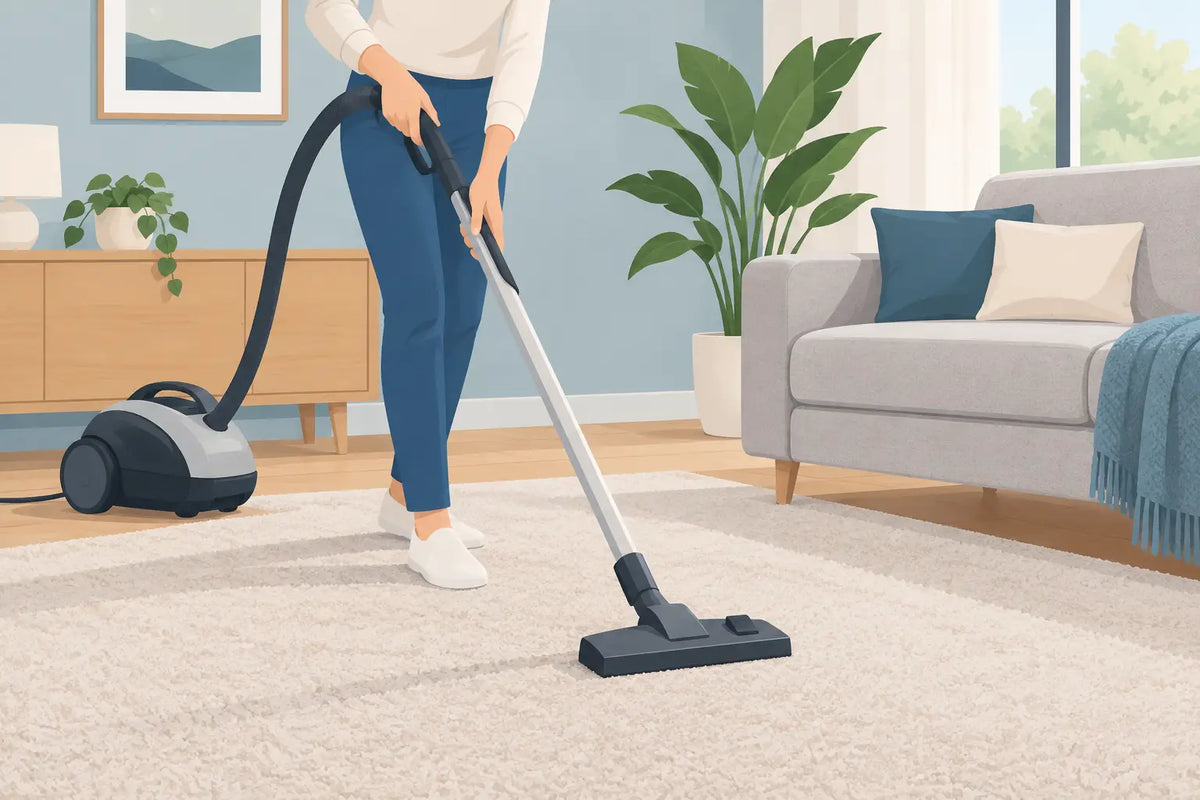
A beautiful rug instantly makes a room feel warmer, but it also collects everything that happens in a home: crumbs after breakfast, sand from shoes, dog hair, and fine dust you can barely see. How often you need to vacuum a rug therefore depends less on a fixed rule than on your household, the room, and the material. With the right routine, your rug will stay fresh, resilient, and pleasantly soft underfoot for longer.
How often should you vacuum each room?
In a heavily used living room, vacuuming twice a week is a good baseline. Do many people walk through the room every day, do children play on the rug, or do you have pets? Then vacuuming three times a week is perfectly reasonable. This prevents dirt from settling between the fibers and keeps the rug from losing its attractive appearance too quickly.
A bedroom rug usually has to cope with fewer shoes, crumbs, and less intensive use. For most households, vacuuming once a week is sufficient. In a guest room or a quiet corner of the house, vacuuming every seven to ten days may be enough, as long as you deal with stains and visible dirt immediately.
In the hallway, near the dining table, or in a playroom, the wear is often greater. Vacuum these areas at least twice a week and remove localized dirt as soon as you notice it. Small food particles can easily disappear into the pile, especially under a dining table. Regular maintenance is much easier than having to deep-clean a rug afterward.
Households with children or pets
Anyone living with a dog, cat, or young children knows the difference between a rug that looks tidy and one that actually feels clean. Hair, sand, cookie crumbs, and muddy paws make more frequent vacuuming advisable. Ideally, vacuum heavily trafficked areas every other day and the entire rug two to three times a week.
This does not mean you have to clean for a long time every time. A short, targeted pass over your pet's favorite resting spot, the play area, or the route to the garden already makes a big difference. For pet hair, use a suitable turbo brush or upholstery brush, but test it carefully first on delicate fibers. A brush that is too aggressive can damage loose fibers or fringes.
For families, washable low-pile rugs are particularly practical. You can easily keep them clean every day with a vacuum cleaner and treat stubborn stains according to the care instructions. An anti-slip backing is an added convenience: the rug stays neatly in place while children play or when you quickly vacuum.
The difference between low-pile and high-pile rugs
Not every rug requires the same approach. Low-pile rugs are the easiest to maintain. Dust and crumbs remain closer to the surface, so vacuuming once or twice a week is often enough in a normally used room. They work well in a modern family home where comfort and convenience can go hand in hand.
High-pile rugs feel wonderfully soft and give a living room or bedroom a luxurious appearance. However, the longer fibers hold more dust. Vacuum a high-pile rug thoroughly once a week, and more often in a room that is used frequently. Work slowly in straight passes and avoid using too much suction. This removes dirt without flattening the full, airy structure.
With a hand-knotted or classic rug, care is even more important. These rugs require gentle treatment, without a hard rotating brush unless the manufacturer explicitly permits it. Vacuum in the direction of the pile and do not run the vacuum nozzle over the fringes. You can gently shake them out or clean them with a soft hand brush.
Vacuuming protects more than just the appearance
Dust is not always visible, but it acts like fine sandpaper between the fibers. When you walk over it every day, grains of sand and dirt can gradually wear down the fibers. As a result, a rug looks duller, feels less soft, and may show signs of wear more quickly.
Regular vacuuming therefore helps preserve the color, texture, and lifespan of your rug. You will notice the difference quickly, especially with light shades such as cream, beige, or soft gray. A well-maintained rug allows its colors to stand out more beautifully and gives your interior the neat, inviting atmosphere you enjoy every day.
A regular routine is also beneficial for a healthier indoor climate. A rug traps dust particles instead of allowing them to swirl through the room with every movement. By vacuuming consistently, you remove those particles again. For people with allergies, a vacuum cleaner with a good filter can make a noticeable difference.
How to vacuum without putting strain on your rug
Technique matters too. Start by removing loose objects from the rug and checking that there are no toys, paper clips, or sharp particles caught in the fibers. Then choose a suction power that suits the material. If the nozzle is difficult to move across the rug, the suction power is probably set too high.
Move slowly across the surface, preferably first in one direction and then at a right angle to it. This removes dirt lodged deep between the fibers without treating the same spot endlessly. For a large rug, it is helpful to divide it into imaginary strips. This makes the process calmer and prevents you from missing sections.
Pay extra attention to the edges and the area under the sofa or coffee table. More dust often collects there than you expect. Lift light furniture occasionally instead of pressing the vacuum nozzle hard against the edge of the rug. This helps keep both the rug and your furniture looking better.
Avoid these common mistakes
Vacuuming a rug too infrequently is not ideal, but vacuuming too eagerly or roughly can also cause damage. Do not use a hard beater brush on delicate wool, silk, hand-knotted rugs, or loose fringes. Also, do not pull on a curling corner while vacuuming. Lay the corner flat first, possibly using a suitable anti-slip underlay beneath the rug.
Also, do not wait until a stain has completely dried. Immediately blot spilled liquid with a clean, absorbent cloth without rubbing. Vacuuming removes dry dirt, but it is not a solution for fresh coffee, wine, or sauce. A quick, gentle approach keeps small accidents from becoming bigger problems.
When does your rug need more than vacuuming?
Even with a good routine, a rug may need a deeper refresh over time. Does it smell less fresh, does the color look dull, or does the pile feel sticky or flat? Then it is time for a more thorough cleaning suited to the material and care instructions.
For washable rugs, washing can be a practical solution, provided you follow the recommended temperature and drying method. For valuable classic, wool, or hand-knotted rugs, professional cleaning is generally the safest choice. Too much water or the wrong cleaning product can damage the colors, backing, or fibers.
Also rotate a loose rug halfway once or twice a year. Sunlight and foot traffic can cause uneven wear, especially in front of a window or near a passageway. Rotating the rug distributes the wear and keeps the whole piece looking balanced for longer.
Choose a rug that suits your daily life
A beautiful rug does not have to be fragile or impractical. People with busy families often deliberately choose a low-pile, washable model in a variegated color or with a refined pattern. This conceals small traces of daily life without compromising on style. For a quiet bedroom, a softer and fuller rug is perfectly suitable, as long as you use the correct vacuum setting.
At Omid Carpets, you will find comfortable, easy-care rugs as well as distinctive classic and hand-knotted rugs. Whatever style you choose, a suitable rug only truly becomes a lasting source of atmosphere when its maintenance fits the way you live.
So make your rug a regular part of your cleaning routine without turning it into a burdensome task. A few calm minutes each week will keep the fibers fresh, the colors vibrant, and your room ready for everything that makes home so cozy.


Leave a comment
This site is protected by hCaptcha and the hCaptcha Privacy Policy and Terms of Service apply.