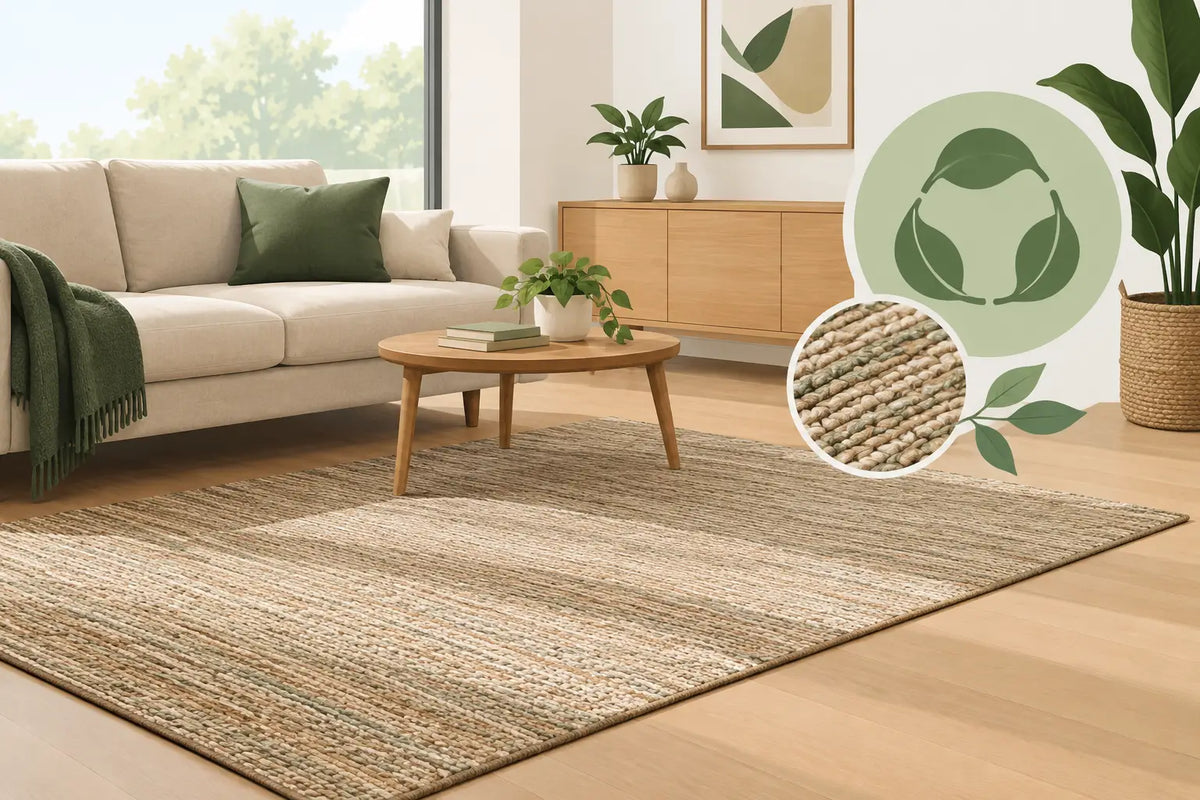
A rug has to put up with a lot: children playing, shoes by the front door, a spilled glass or the dog’s daily walk across it. It’s no wonder that sustainable rugs are on the rise. Belgian families want an interior that looks warm and well-kept, but rightly expect a rug that lasts, feels pleasant and is easy to care for.
Sustainability is more than a label or a trendy word. It’s about thoughtful material choices, quality workmanship and a design you won’t tire of after just one season. Choosing carefully means investing in a lasting atmosphere - from a cosy bedroom to a busy living space where family life unfolds.
Sustainable rugs on the rise: why now?
Interior trends change quickly, but the need for a homely foundation remains. Rugs play a key role in this. They absorb sound, visually bring furniture together and instantly make a room feel softer. At the same time, people are increasingly aware that a very cheap rug that wears out quickly or is difficult to care for may not be a cost-effective choice in the long run.
That’s why more and more people are looking beyond colour and size alone. They ask what a rug is made of, how long it will stay looking good and whether it suits everyday life. A family with young children has different requirements from a couple looking to create a peaceful seating area, but both want comfort without unnecessary waste.
Timelessness also plays a part. A rug with a balanced design, a warm neutral shade or a subtle pattern often remains a good fit for longer when you change your cushions, curtains or wall colour. That way, every new interior idea doesn’t have to mean buying a completely new rug.
Sustainable doesn’t always mean the same thing
A sustainable rug can have various strengths. Some designs are made from natural fibres such as wool, cotton, jute or sisal. Others use recycled synthetic fibres, which are strong and often particularly easy to care for. Then there’s the rug’s lifespan: a well-made rug that stays looking good for years is generally a better choice than an alternative that quickly loses its shape, colour or softness.
Wool is popular for its rich appearance, natural resilience and insulating properties. It feels cosy and can last a long time when properly cared for. In a dining room where stains are likely, wool does require more attention than a low-pile synthetic rug. So there isn’t one material that’s always the best choice.
Cotton has a light, inviting look and works well in rooms you want to clean regularly. Jute and sisal, on the other hand, add character with their distinctive, natural texture. They look beautiful in calm, country-style or modern interiors, but feel less soft under bare feet. In a bedroom, that’s something to consider carefully.
Synthetic materials also have their place. Modern varieties can be hard-wearing, colourfast and easy to wash. Especially in an entryway, kitchen, child’s room or home with pets, a washable low-pile rug is often the practical winner. Sustainability here isn’t just about the raw material, but also about keeping the rug fresh and usable for longer.
Look beyond the material
If you want to make a considered purchase, it’s best to assess a rug as a whole. The pile density, edge finishing and backing quality all help determine how well the rug retains its shape. A thin rug can be perfect for a compact space, but in a high-traffic area, a sturdier model will often stay beautiful for longer.
Also consider the room’s function. In the living room, a rug can be luxurious and soft, as long as it can withstand daily use. Under a dining table, a low-pile design with a subtle pattern is often a better choice: chairs slide more easily, and small stains are less noticeable. In a child’s room, softness, washability and a stable fit are more important than a delicate, high pile.
A non-slip backing is no small detail. It helps prevent the rug from shifting, makes everyday use safer and can help extend its lifespan by keeping the rug firmly in place. Do you have a particularly slippery floor or a rug without a built-in non-slip layer? A separate non-slip underlay can be a worthwhile addition.
A size that keeps working
The wrong size is one of the main reasons a rug is replaced quickly. A rug that is too small can make a seating area look fragmented, while a suitable large size creates a sense of calm. In the living room, choose a size that allows at least the front legs of the sofa and armchairs to rest on the rug.
Under the dining table, the rug should be large enough for chairs to remain on it even when pulled back. This prevents wobbling and protects the floor better. Choosing the right dimensions from the outset helps you avoid buying a rug that looked good in a photo but doesn’t work in your home.
Maintenance is part of sustainability
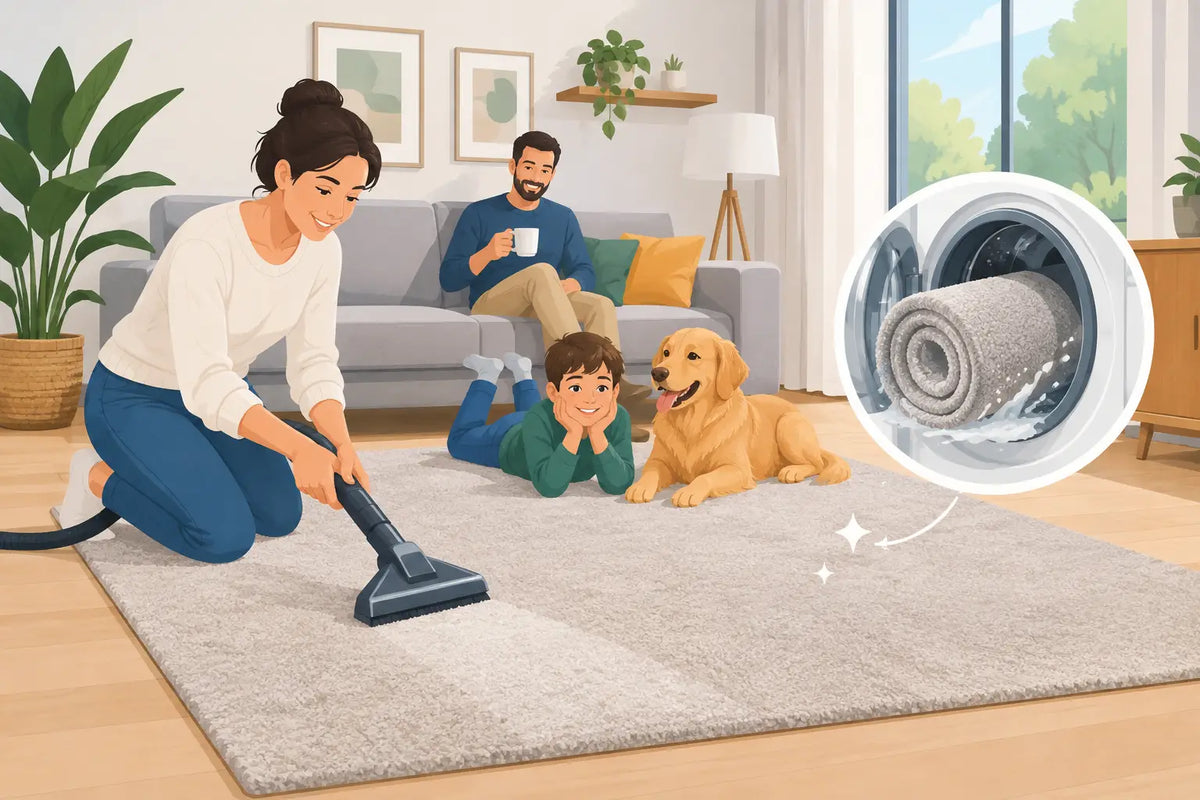
A well-cared-for rug stays beautiful noticeably longer. Regular vacuuming prevents sand and dirt from wearing deep into the fibres. Treat a fresh stain carefully right away: blot it with a clean, slightly damp cloth instead of rubbing hard. This prevents the stain from spreading or the fibres from getting damaged.
Washable rugs offer extra peace of mind in a lively household. Always check the care instructions and the maximum capacity of your washing machine beforehand. A large rug may be too heavy when wet. Sometimes spot cleaning or professional care is the safer choice, especially for wool, hand-knotted rugs and delicate natural fibers.
Turn a rug occasionally, especially if it gets a lot of sunlight or one side gets more foot traffic. This helps the color fade more evenly and the pile wear more evenly. Small habits make a big difference in the long run.
Choosing stylishly without the stress of fleeting trends
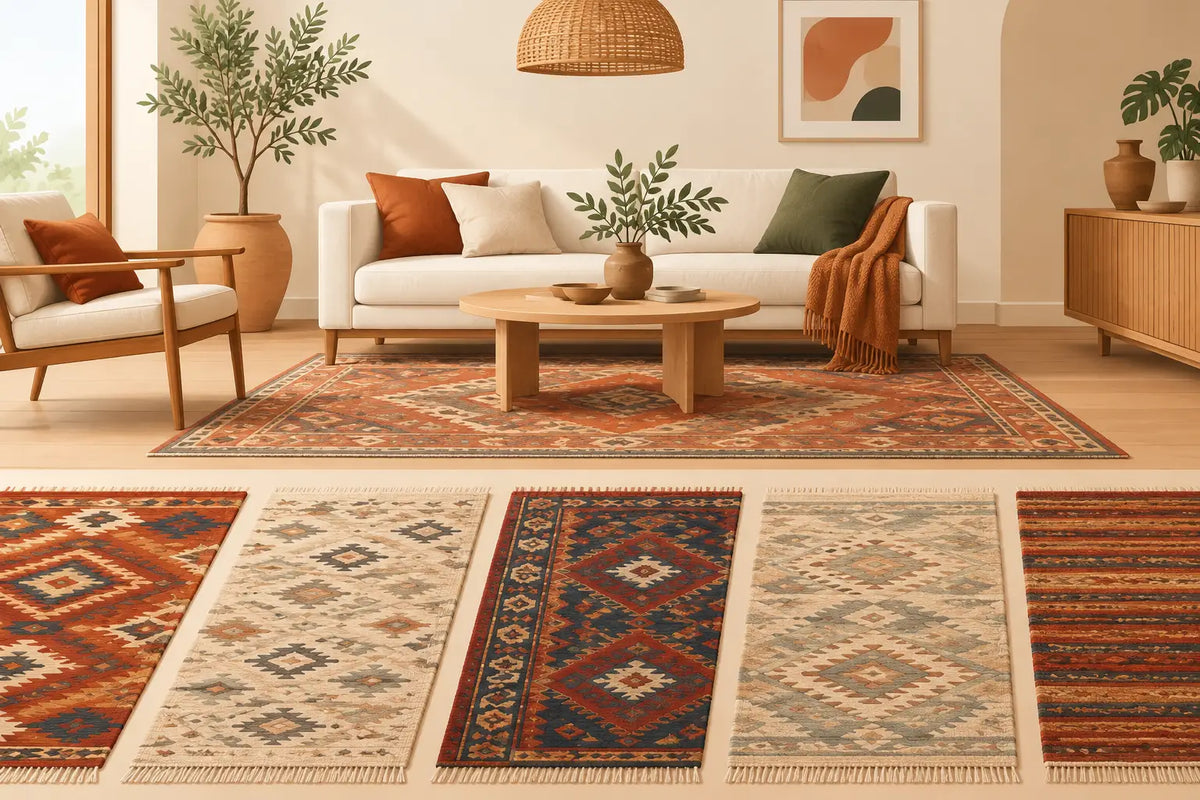
Sustainable living doesn’t have to be plain at all. A rug can bring color, texture and personality. The secret is to choose a design that matches the atmosphere you really want to feel when you come home. Warm sand tones, beige, greige and soft earth tones make for a calm foundation. A classic pattern or a refined kilim, on the other hand, can add depth to a modern interior.
If you like changing up your accessories, a rug that incorporates color in a subtle way is a great choice. Think of a mottled surface, a tone-on-tone design or a pattern that brings together several shades. This way, the rug pairs easily with new cushions, a different sofa cover or an accent wall, without having to redecorate the whole room.
Craftsmanship also deserves attention. Hand-knotted rugs and authentic kilims often have a story of their own, distinctive details and a look that doesn’t feel mass-produced. They may require a bigger budget and more careful maintenance, but they can add character to an interior for generations. For those who appreciate that cultural richness and are looking for a unique accent, they’re well worth considering.
A choice that suits your life
The best sustainable choice isn’t necessarily the most expensive, thickest or most natural rug. It’s the one that suits your space, your family and your lifestyle. A refined wool rug can shine in a quiet living room, while a washable model with an anti-slip backing is much better suited to a busy family kitchen.
At Omid Carpets, this combination of beauty and everyday practicality is central. A rug should look beautiful not only on the day it’s delivered, but also continue to bring warmth and comfort as life unfolds on top of it.
So take a moment to measure your room, check the natural light and think about what happens in that space every day. That way, you’ll choose not a temporary accent, but a trusted foundation your interior can build on for years to come.

Leave a comment
This site is protected by hCaptcha and the hCaptcha Privacy Policy and Terms of Service apply.